


Skylar is a member of the War Studies Department at King’s College, London. She wrote this piece as part of her internship with BizGees/ Arts4Refugees. These are her observations from her time as a journalist in Armenia from late September to late November 2023. Her motivation was to help her peer group understand the unique experiences of post-conflict communities. She also edited and interviewed herself.
🎧 listen to Skylar’s backstory here - she discusses her motivation & research as well.
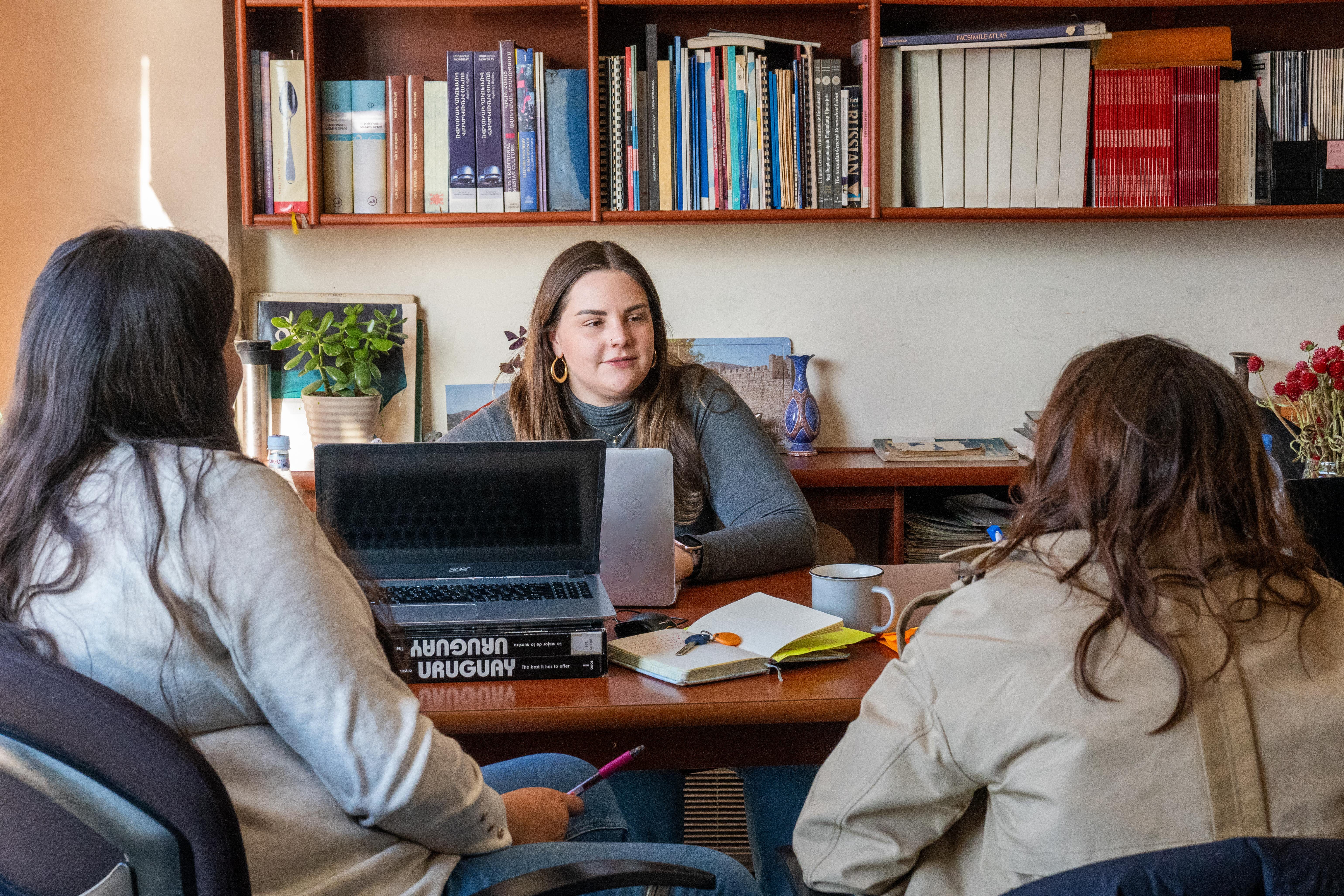
Civil Net’s office in Yerevan, with colleagues displaced from Nagorno-Karabakh.
The Total Impact of War: Fall-Out From Nagorno-Karabakh
Azerbaijan’s months’ long blockade of Nagorno-Karabakh (also known as Artsakh) and late September military offensive drove nearly the entire population of ethnic Armenians to flee for Armenia. Reaching the border was not simple as fuel was scarce, communication lines were down, and there was great uncertainty as to who and what might be allowed through the Azerbaijani checkpoint. To add to the sense of chaos, a warehouse near the region’s capital of Stepanakert, where many had been queuing for fuel, exploded and killed more than 200 people.
This mass forced displacement, which many have justifiably argued amounts to ethnic cleansing, resulted in long lines of traffic. This turned what would normally be a few hours drive to days of waiting with limited access to food and water. While finally crossing into the Armenian border town of Kornidzor no doubt brought relief for some, it merely signaled the beginning of what would be yet another difficult journey for the ethnic Armenians of Nagorno-Karabakh.
Despite the fact that the conflict has been ongoing for decades, the Armenian government openly admitted to having no contingency plan for this scenario. Therefore, it was primarily the role of international humanitarian aid workers and Armenian volunteers to register and assist the new arrivals to the country’s southernmost Syunik region.
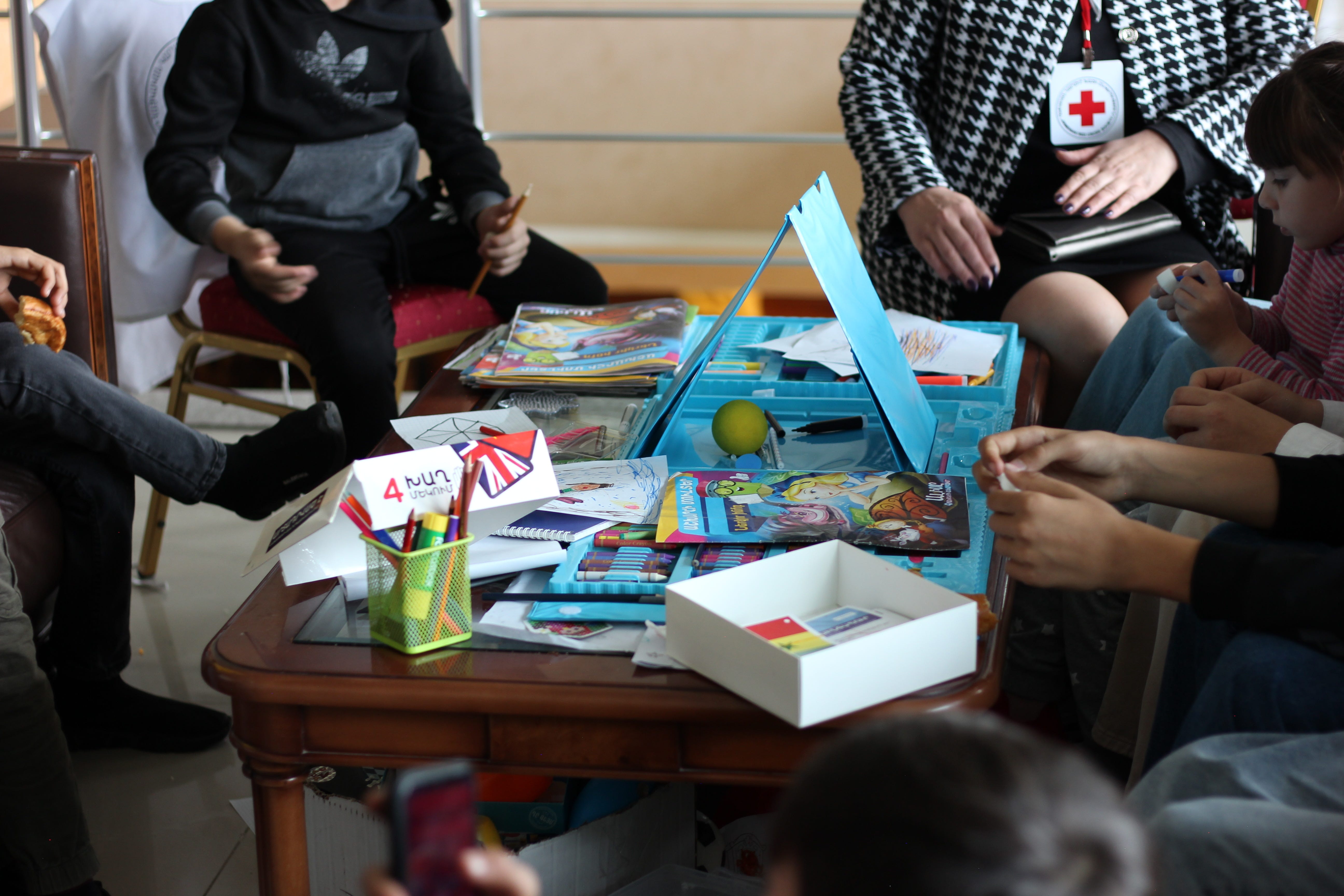
The International Committee of the Red Cross providing activities for forcibly displaced children across the border in Goris, Armenia.
There, volunteers worked tirelessly to provide the bare necessities that the forcibly displaced needed - water, food, medicine, blankets, and a place to sleep. Many of the Nagorno-Karabakh residents quickly moved on to disparate parts of the country where they had friends or relatives to stay with. Some had nowhere to go and were instead placed in every available shelter, hotel, and homestay room that could be found.
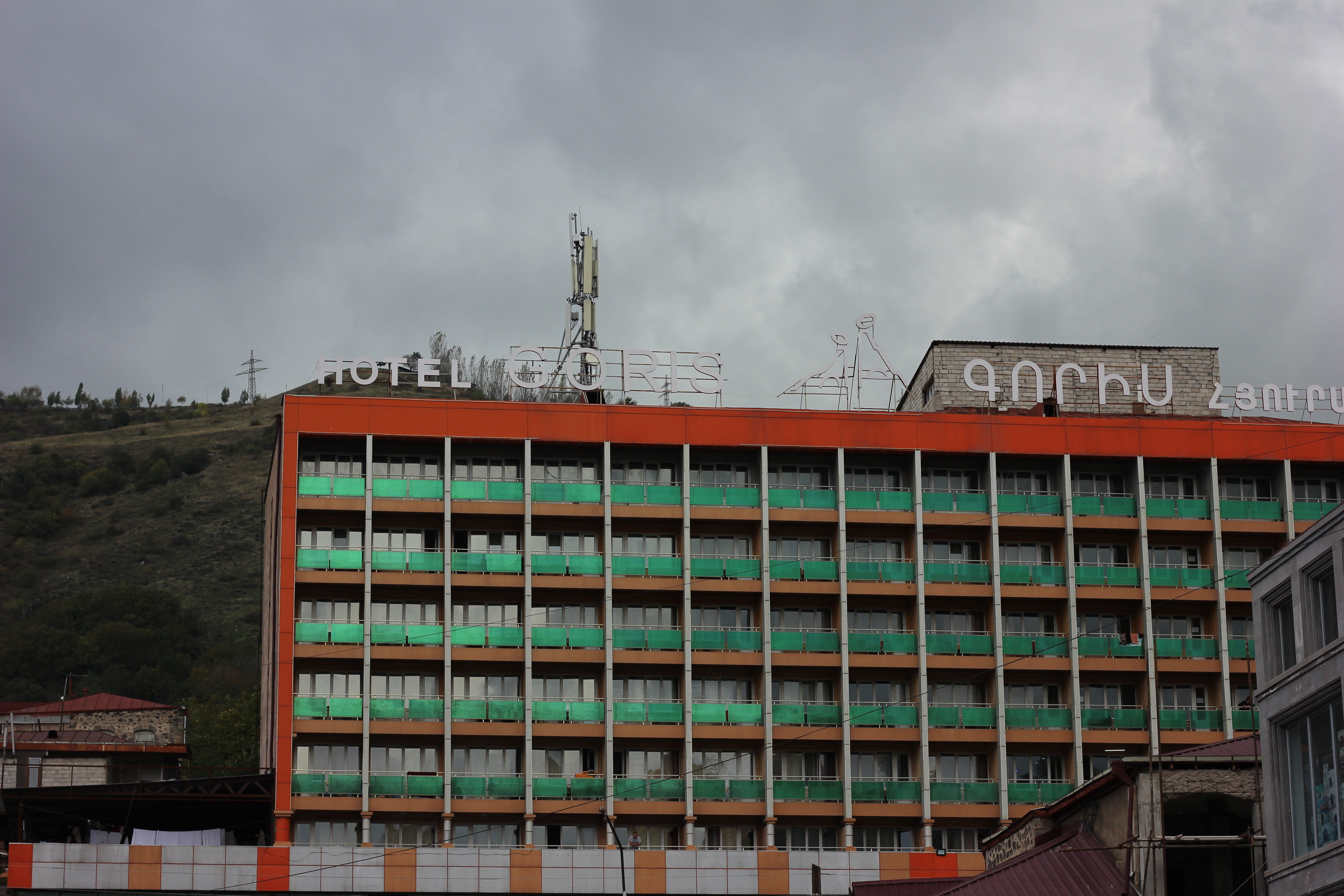
The main hotel in Goris, which housed hundreds of forcibly displaced persons at a time after their arrival into Armenia.
The immediate support provided was nothing short of astounding - within days the initial registration tents were packed up and driven away as longer-term planning began to take precedence. Many of these dedicated volunteers were members of the Armenian diaspora who had come to reconnect with their Armenian roots and pivoted to take action as soon as needed. They served critical roles as registers, translators, and organizers during this critical time.
Initially, the conflict made international headlines with major media outlets sending correspondents to cover the shocking human rights crisis. However, the resurgence of conflict in the Middle East in early October shifted the world’s attention and the story of Nagorno-Karabakh was again relegated to the sidelines. This reinforced to me the importance of covering underreported stories.
Meanwhile in the country's capital of Yerevan, thousands gathered in Republic Square to protest Prime Minister Nikol Pashinyan’s policy on Nagorno-Karabakh. Police officers across the capital unlawfully detained citizens, likely in an effort to quell dissent. Regardless, symbols of solidarity with the people of Nagorno-Karabakh continued to emerge. There was street art, posters, and businesses plastered with the self-declared republic’s flag.
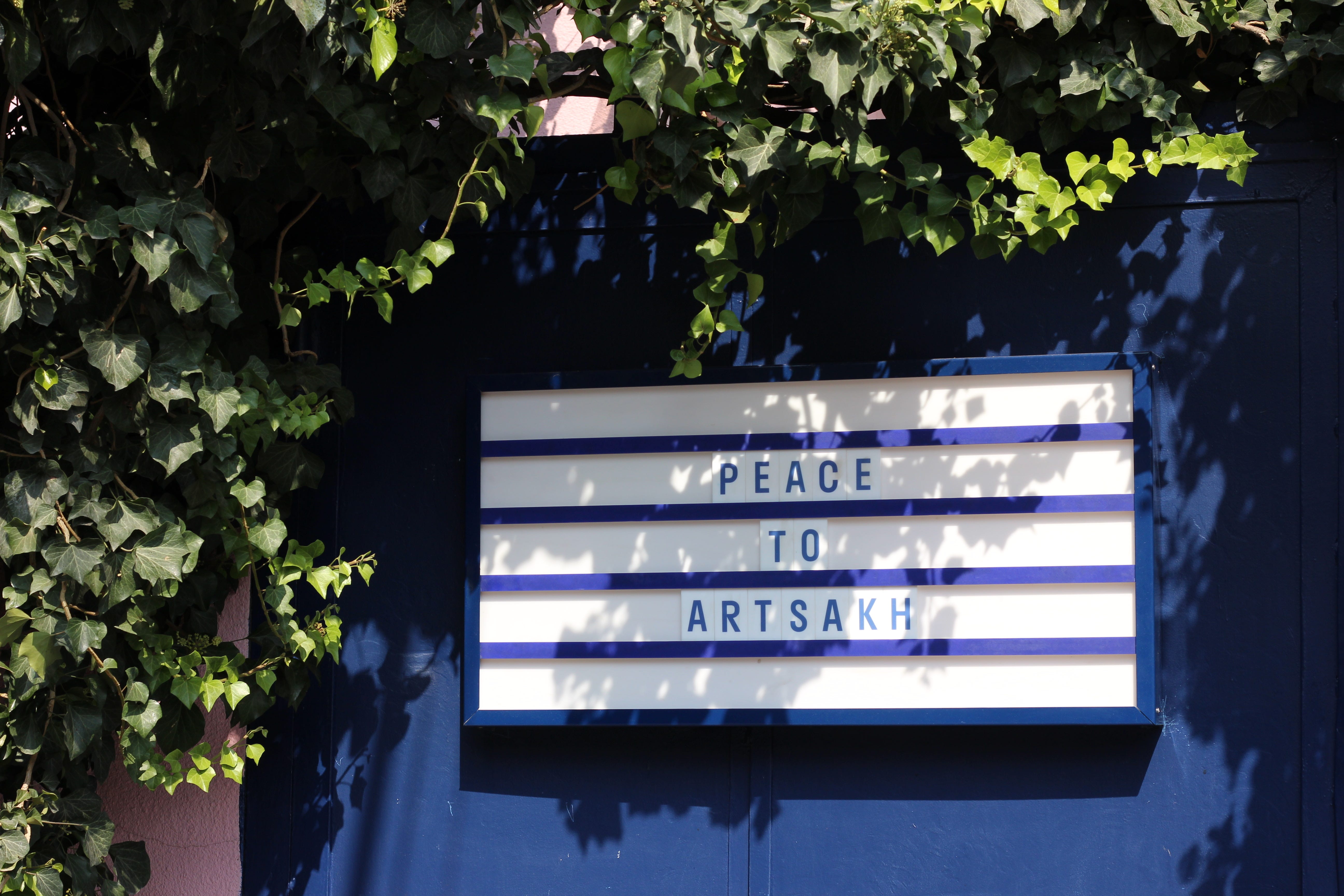
A local business in Yerevan displaying a message of support for Artsakh.
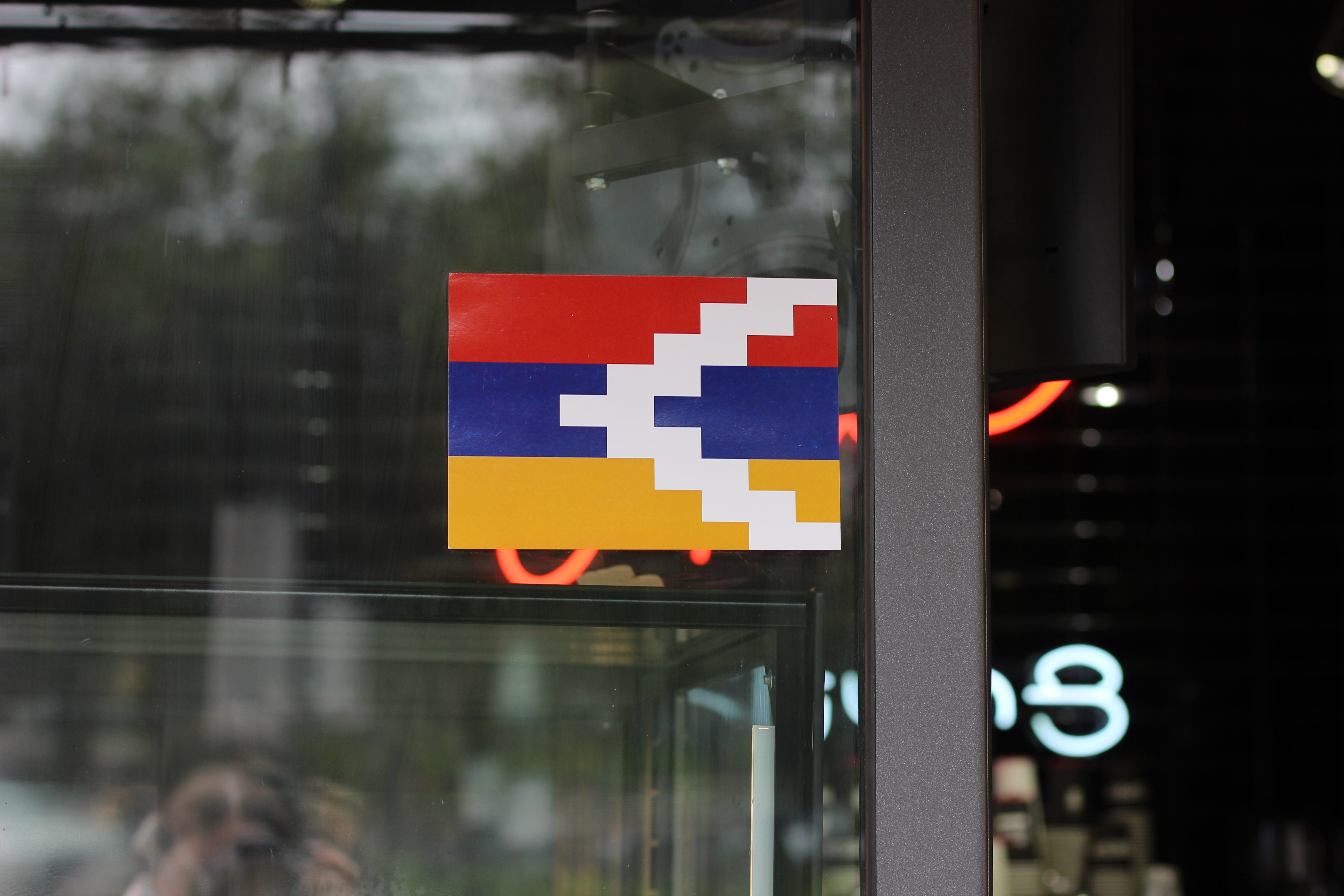
A local business in Yerevan displaying the flag of the self-declared republic.
The government provided some offers of housing for those displaced, but the majority were located along parts of the border with Azerbaijan, which understandably struck fear in the hearts of those who had just been displaced from their homes. This housing crisis became personal for me when I received a call late one night that parents with a young child who had been forcibly displaced in 2020 and again that week, had finally reached Yerevan and were sleeping in their car. I immediately agreed to them moving in with me at my accommodation at the Armenian General Benevolent Union (AGBU).
When they arrived at my room late that night, the exhaustion was evident on their faces. I was eager to speak with them and hear their story, but also wanted to respect their privacy in what were probably some of the most difficult days of their lives. I wanted to make them feel welcome, but didn’t know what supplies they might need. So, I brought home crafts for their little girl, who couldn’t have been more than five years old. The family wasn’t in, so I left them by the door with a note simply saying “for you”. A few nights later, I heard a knock at my door. It was the daughter and her mother. They had come to say thank you and give me a pair of bananas to express their gratitude. I was absolutely floored that people, who had just lost everything but their lives, would go out of their way to thank me for such a simple act of kindness.
That same week, our building lobby became a base for Chef Jose Andres’ World Central Kitchen (WCK) who partnered with AGBU, local volunteers, members of the Armenian diaspora, and forcibly displaced persons to cook thousands of meals a day for those in need. There, I had the opportunity to interview a woman named Emma who had been forcibly displaced from her home merely days prior. She explained to me that her 94-year old mother had passed away shortly after crossing the border into Armenia because of the hardships of the journey, realizing she would never be able to go home. When asked what support would be most helpful for her at this time, Emma immediately turned to the needs of others saying, “I want peace for the world, not just for the Armenian nation but for all of the world. When I see what’s happening it pains me… It hurts me that the earth seems to be falling off its axis. I don’t want it to happen, I want peace”.
The impact of the war was evident all across Yerevan, despite being hundreds of kilometers away from the ‘front line’. At one of the capital’s more popular bars, I saw a young man with two prosthetics for hands, almost certainly a result of fighting in the war. Another venue had a sign advertising for Frontline Therapists, a non-profit created following the 2020 war to provide emergency mental health services to those most severely impacted. Yet another venue had a makeshift sign posted outside the entrance - ‘no Azerbaijani citizens allowed’. To me, these observations speak to the far-reaching impact of war not only on those most closely involved, but entire societies and generations whose psyches are and will continue to be affected.
One evening I paid a visit to Yerablur Military Cemetery, where there are rows of headstones etched with the names and faces of Armenia’s fallen. Many buried there were younger than me when they passed. I had never seen such an active cemetery before. There, I observed youth, families, couples, and individuals diligently hand washing their loved ones’ graves. Some of the markers were elaborately decorated for birthdays the men would never get to celebrate. In a country as small and well-connected as Armenia, everyone knew someone directly impacted by the conflict.
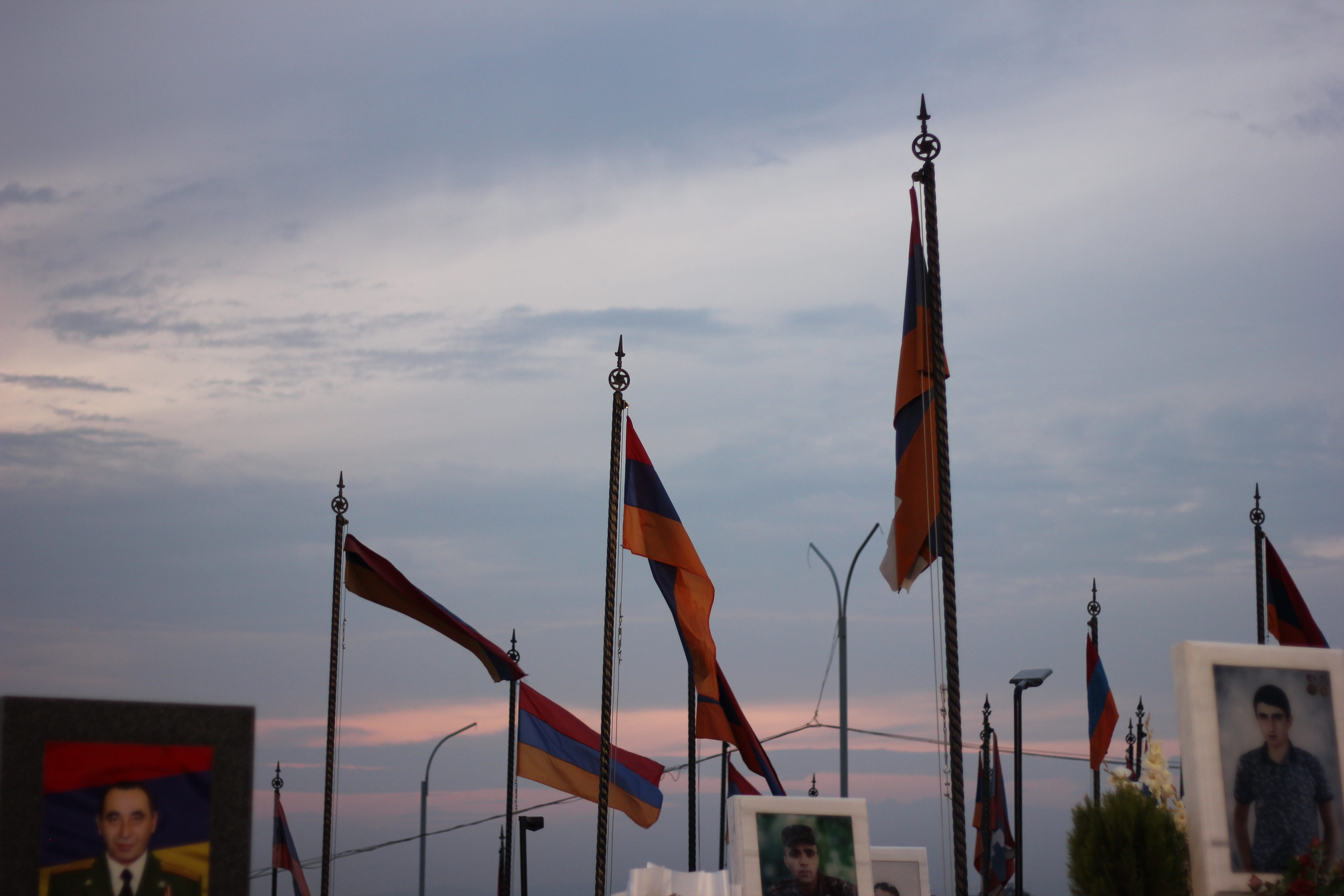
Tombstones with the faces of fallen soldiers at Yerablur Military Cemetery.
The war was the topic of conversation at every social gathering, no matter how well (or not) you knew the people around you. One of the biggest fears in Yerevan at this time was that Azerbaijan would invade Armenia proper. Ongoing rhetoric from the Azerbaijani government and its leader Ilham Aliyev have only exacerbated those concerns, especially with his push for the so-called Zanzegur Corridor to connect the country, through Armenia, to its exclave of Nakhchivan. With peace talks seemingly stalled and little progress on border delimitation taking place, concerns about a resurgence in conflict should be taken seriously.
The psychological impact of the blockade, war, and displacement were especially evident on the faces of those from Nagorno-Karabakh. They experienced unimaginable suffering, survived, and yet faced an uncertain future. They left behind their schools, homes, jobs, and livestock. Entire communities were disrupted and many continue to fear the loss of their identity along with their homeland. Because the enclave’s status is historically disputed, those from Nagorno-Karabakh do not technically have Armenian citizenship. They also do not speak the same dialect of Armenian. They have their own cultural monuments and idiosyncrasies, which are now at risk of being erased.
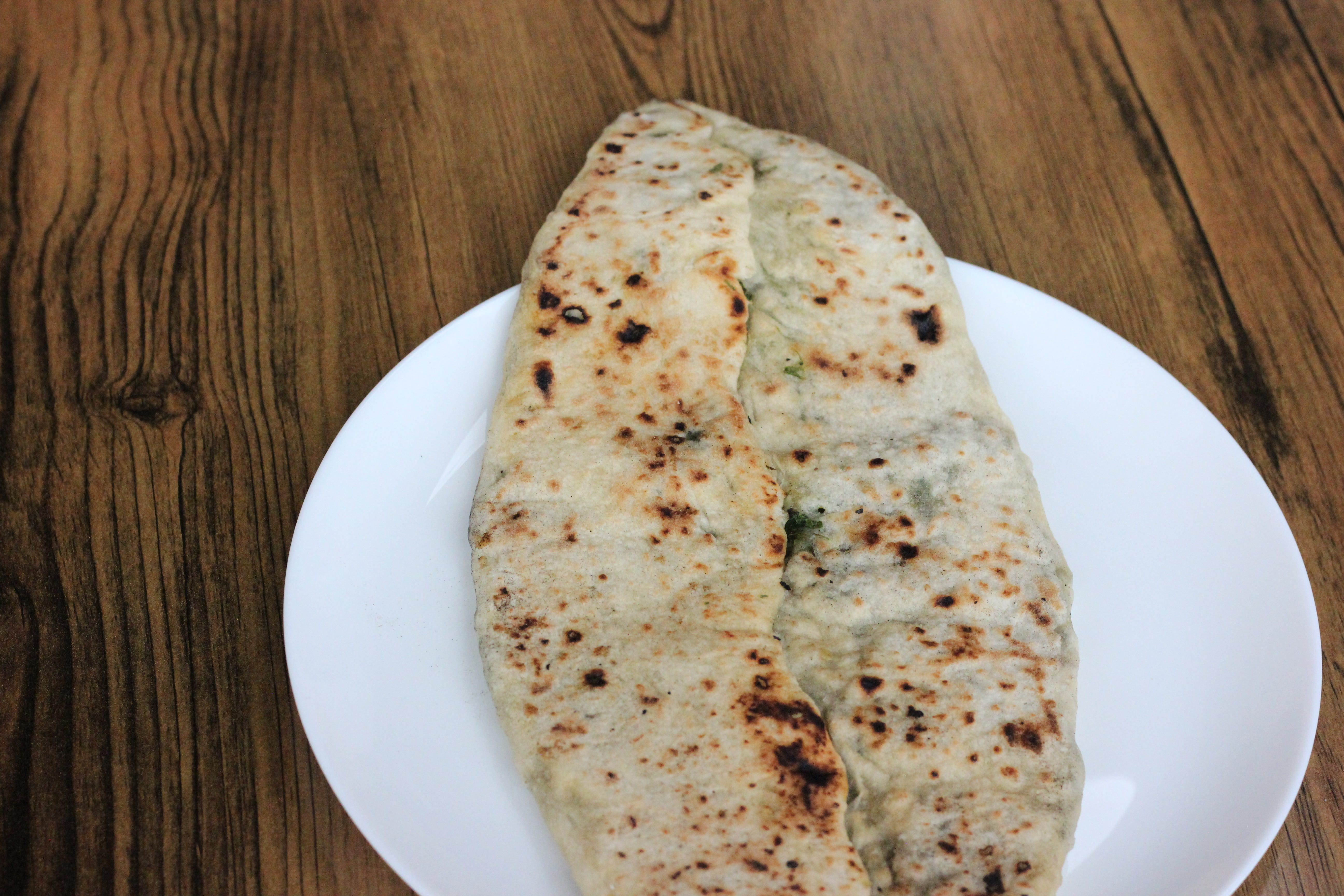
Zhingyalov hats, a flatbread stuffed full of chopped greens, is a famous dish from Nagorno-Karabakh.
While commendable efforts have been made to enroll the children of Nagorno-Karabakh in local schools, as well as connect adults with job opportunities, this cannot replace what has been lost. What many of the forcibly displaced persons want more than anything is to be able to safely return home. However, under the Armenophobic and autocratic government of Azerbaijan, this dream is likely impossible. If and until that day comes, the ethnic Armenians of Nagorno-Karabakh will have to continue re-establishing their lives on the other side of the border.
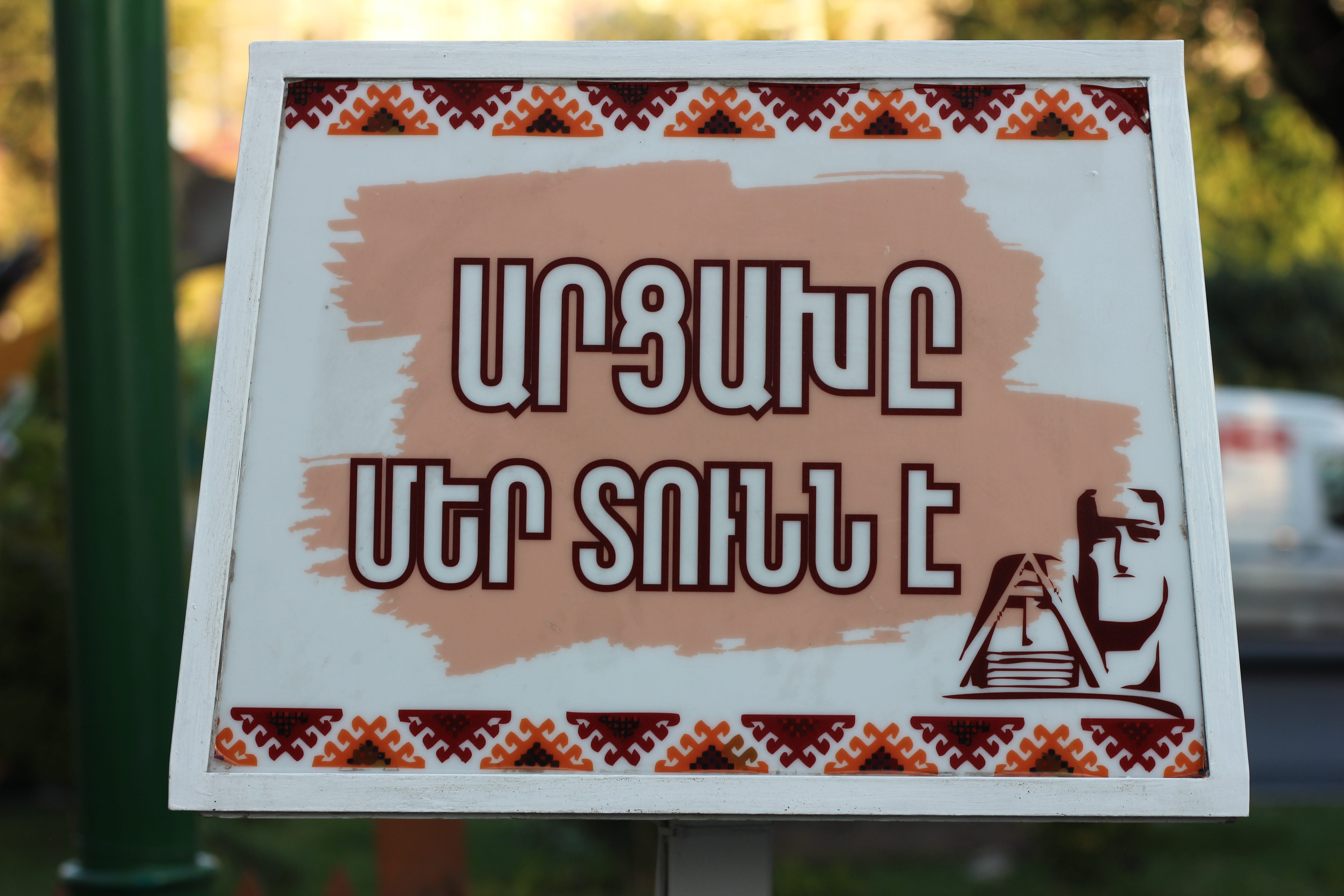
Display in a Yerevan park stating “Artsakh is our home”.
Thank you for reading an A4R 🎨 Post. Don’t forget to share it with your friends and family.