

Summary:
A Gen Z Viber at the A4R Media Hub wanted her peers to understand something simple and true about trauma, conflict, and the 123 million people we're not talking about. She didn't write a report. She made two cards. This is the context behind them.
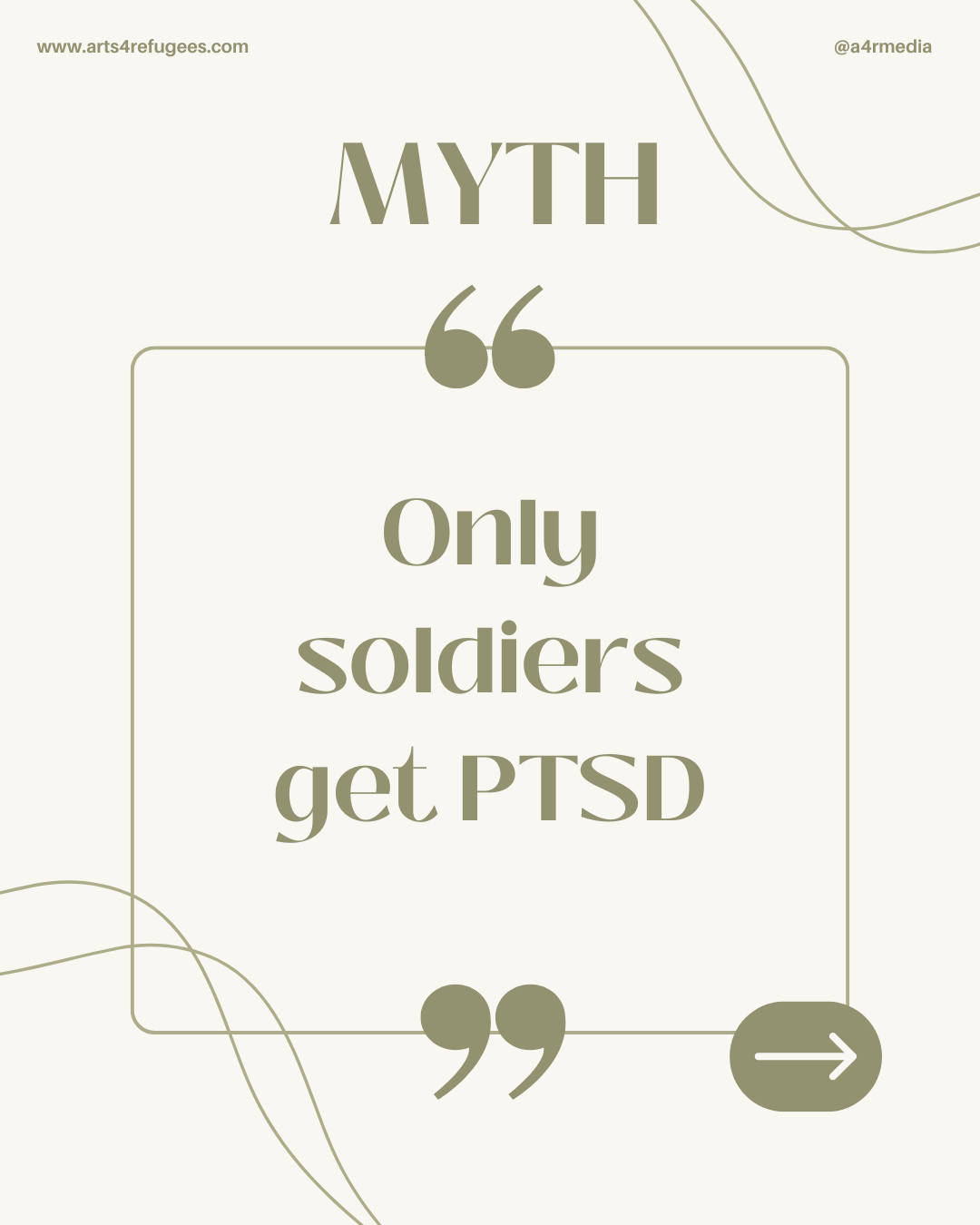
A Gen Z Viber at the Arts4Refugees Media Hub made these cards because she wanted her peer group to see this clearly. Not through a clinical lens. Not through policy language. Just the myth, then the reality, side by side. Simple enough to share. True enough to land.
The myth: only soldiers get PTSD.
The reality: everyone is affected by conflict.Two cards. Eleven words between them. And a gap that contains one of the most under-examined mental health crises of our generation.
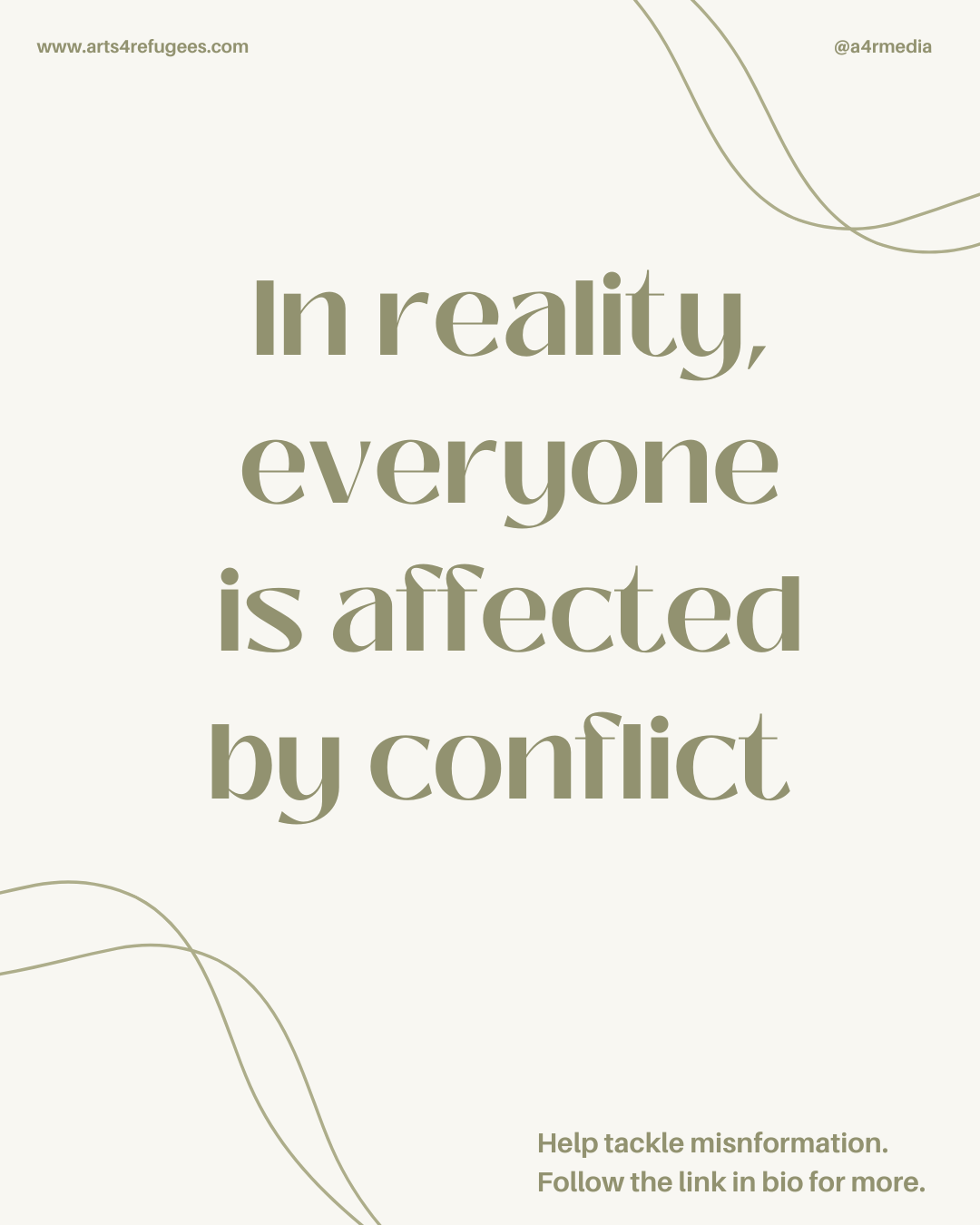
The myth didn’t come from nowhere. It came from decades of necessary, hard-won advocacy for military veterans — a population that fought publicly and painfully for their trauma to be recognised, named, and treated. That fight mattered. It still matters. And it gave us something invaluable: a shared cultural understanding that conflict exposure leaves a psychological mark. That coming back isn’t the same as being okay.
But somewhere in that process, PTSD became associated almost exclusively with the military experience. With combat. With a life chosen in deliberate proximity to danger. And that association — however unintentionally — drew a line around who trauma belongs to.Chances are you already accept, on some level, that what they went through left a mark. You have a relationship with that truth. Now take that same understanding — and extend it. Because here is what displacement actually looks like. It is not a clean exit from a conflict zone. It is watching your neighbourhood become one. It is losing your home, your community, your sense of safety — not in a defined tour of duty with a return date and institutional support, but in an open-ended rupture with no debrief, no framework, and no cultural script that says what happened to you was traumatic enough to matter.
The majority of the world’s 123+ million forcibly displaced people are carrying significant psychological trauma. Most of it undiagnosed. Most of it unnamed. Not because it isn’t real — but because the systems we built to identify and treat PTSD were designed around a different template. And displaced civilians don’t fit it, so they fall through the gap.Undiagnosed trauma doesn’t disappear. It shapes how people parent. How communities rebuild. How young people who grew up in post-conflict environments understand themselves and their futures. The mental health crisis inside displacement is one of the least visible and most consequential challenges of our time — and it starts with a myth most of us have never thought to question.
That’s why two cards matter. That’s why a Gen Z Viber, still at university, building her skills through real work at A4R, decided this was the conversation her peers needed to have. Not a lecture. Not a policy brief. Just a myth, a reality, and an invitation to look more carefully at both.
If you’ve ever accepted that a soldier can carry trauma home from conflict — you already have everything you need to understand what 123 million displaced civilians are living with. The only thing missing is the conversation.Start the Conversation
Displacement doesn’t end when the conflict does. Explore the stories, research, and co-created content from the A4R Media Hub community — made by Gen Z, for Gen Z, about the issues that define our time.
🔗 Read and listen to our latest collaborative drops directly here.
This piece was produced as a guest contribution to the Arts4Refugees Media Hub, in collaboration with the BizGees community and the Gen Z Vibers co-creating it.
Thank you for reading an A4R 🎨 Post. Don’t forget to visit our gaming art here. Every purchase scales our impact and pays our bills.
