

AT A GLANCE:
A Gen Z shopper scans a tag and asks an AI assistant a direct question: who made this, and were they paid fairly? It’s an unremarkable Thursday for them — five seconds, mid-scroll, no different from checking a price. But the answer they get back reveals something the brand never meant to say out loud. This is a generation fluent in a question most of the industry hasn’t learned to answer.
A Completely Normal Thursday
She’s standing in the aisle, phone up, scanning the tag on a jacket. Not checking the price — she already knows that. She’s asking the AI assistant built into her shopping app a different question: who made this, and under what conditions? It takes five seconds. She moves to the next rack before the answer even fully loads.
A decade ago, this would have meant hours: digging through a brand’s sustainability page, cross-referencing a certification logo against a list she’d have had to find first, reading a glossy paragraph designed to sound like an answer without giving one. Now it’s a reflex, no more deliberate than checking a nutrition label. This is what it looks like to be the first generation that grew up asking an AI before buying, instead of after regretting.
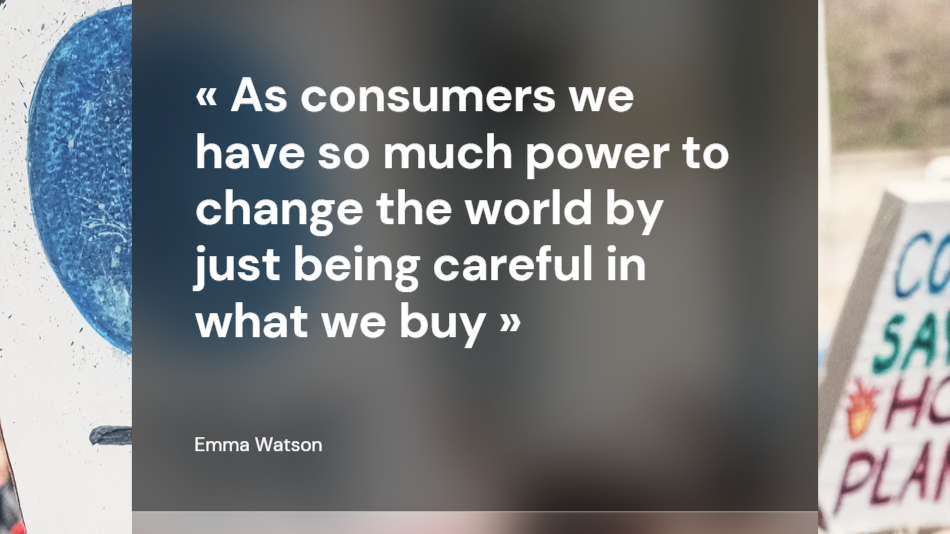
“As consumers we have so much power to change the world by just being careful in what we buy,” Emma Watson has said. For most of the people who’ve nodded along to that sentence, being careful meant doing the homework yourself — and most people, most of the time, don’t have the hours. For the generation scanning tags mid-scroll, the homework increasingly does itself. The power Watson described isn’t aspirational anymore. It’s becoming operational, one scan at a time.
A Generation Fluent in a Question the Industry Hasn’t Learned to Answer
Here’s what’s actually new about this moment. It isn’t that Gen Z cares more about ethics than previous generations — every generation has had people who cared. What’s new is fluency: an entire cohort that asks “show me your supply chain” as casually as a previous generation asked “is this on sale?” It’s not research. It’s instinct, built into the shopping habit itself.
The trouble is that the industry on the other end of that question is still speaking an older language. Across the 250 largest fashion brands, the average transparency score sits at just 26%. Fewer than four in ten major brands even disclose their tier-1 factories — the most basic, surface-level layer of “where was this made,” let alone who made it or how they were treated. When a generation fluent in a new kind of question runs into an industry that has barely started learning how to respond, the gap doesn’t show up as silence. It shows up as a smooth, generic paragraph that sounds like an answer and isn’t one.
That gap is worth sitting with, because it’s not really a technology problem. The AI assistant isn’t failing to find the answer — it’s accurately reporting that there isn’t one to find. A chatbot can only repeat what’s actually been disclosed, verified, and digitized. When the response is vague, evasive, or suspiciously upbeat with no specifics, that’s not a glitch in the system. It’s the brand’s actual transparency, showing through a five-second scan, whether the brand intended to reveal it or not.
The Demand Was Never the Problem
What makes this moment different from every previous round of “ethical consumer” messaging is that the appetite is no longer niche. The majority of consumers — not a dedicated minority — say they’re willing to pay more for a transparent supply chain, and a clear majority say they’ll actually switch brands over it. This isn’t a small group of people willing to pay a premium for a feeling. It’s mainstream commercial leverage that’s been sitting unused, waiting for the infrastructure to make it actionable.
That infrastructure is arriving in pieces — digital product passports, QR-linked traceability platforms, apps that let a shopper see a garment’s actual environmental footprint and verify the hours its makers logged. None of it is universal yet, and none of it makes a brand’s claims true just by existing. But it’s the first time the tools to ask the question and to actually verify the answer have lived in the same five seconds, in the same hand, mid-aisle.
Hearing a Non-Answer for What It Is
Go back to the aisle. The shopper gets her answer — and imagine, for a moment, that it’s vague. A line about “committed to ethical sourcing,” no names, no numbers, no specifics. The easy mistake is to read that as harmless marketing filler and move on, jacket in hand. The more useful read is to recognize it as data: this brand, asked directly, had nothing real to say.
That’s the actual skill underneath all of this, and it’s not a technical one. Knowing how to scan a tag is trivial. Knowing what a real answer looks like — a named factory, a verified certification, a specific number — versus what a generated-sounding non-answer looks like is a kind of literacy nobody is teaching deliberately. It’s the difference between using a tool and understanding what the tool is actually telling you.
This is the literacy A4R’s vocational training exists to build in young creators: not just the instinct to ask, which this generation already has, but the discipline to evaluate what comes back — to treat a vague answer as information in its own right, rather than as a reason to stop asking. Watson’s “power to change the world” was never really about the moment of purchase. It’s about what you do with the answer you get, and whether you’re equipped to tell a real one from a hollow one.
That’s the gap between a generation that asks and a generation that knows what it’s listening for. Closing it is the work.
Join the conversation
The A4R Media Hub is co-created by Gen Z, for Gen Z — on the issues that matter most, made by young people who refuse to look away.
🔗 Explore our latest work at arts4refugees.com
This piece was produced as part of the Ink & Ashes series at the Arts4Refugees Media Hub, in collaboration with the BizGees community and the Gen Z Vibers co-creating it.
Thank you for reading an A4R 🎨 Post. Don’t forget to visit our gaming art here. Every purchase scales our impact and pays our bills.
