


In this episode Ursula discusses Marianne Breslauer. She is a student journalist with us on a placement organised by the Oxford University Career Services. This article was edited using Lex.page
🎧 listen to Ursula’s backstory here - she discusses her motivation & research as well.
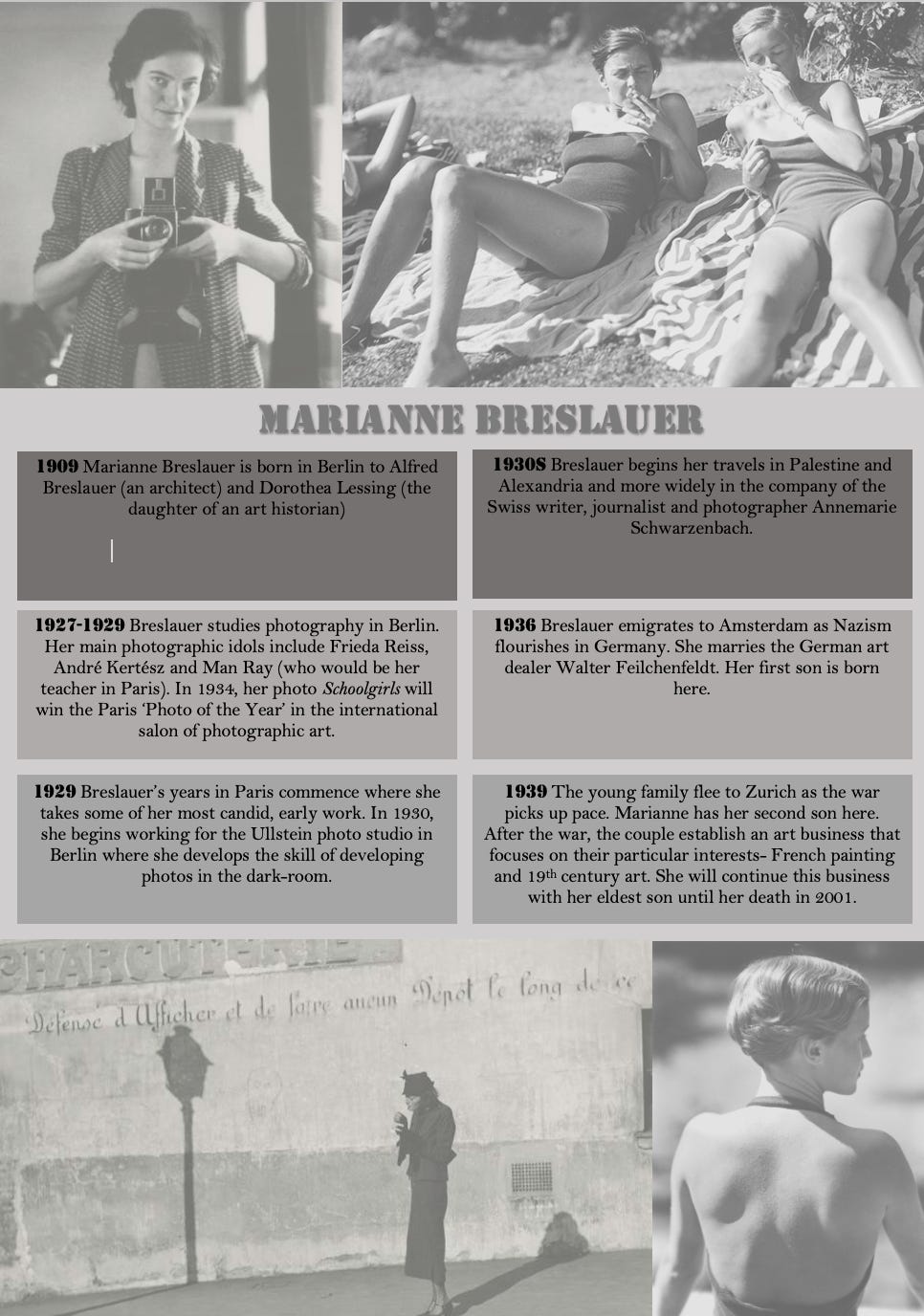
Ursula also wrote a short 2 min read article about Marianne Breslauer with a summary inforgraphic.
Marianne Breslauer's photographs are fleeting glimpses, capturing a moment in time with a click. A woman on a Parisian street, her jawline shadowed by a 30s bob, defiantly lighting a cigarette.
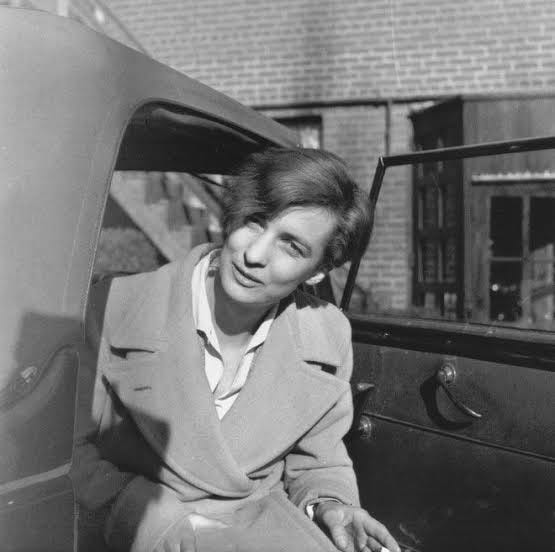
Breslauer was a restless spirit, born in 1909. She was Jewish and German, she studied photography in Berlin before gravitating towards Paris. There, her camera captured the casual elegance of Parisians strolling the grand boulevards. Her style is simple yet intense, filled with watchful eyes and a sense of rootlessness, reflecting her own life journey.
Breslauer's Jewish heritage cast a long shadow. As Nazi sentiment rose in Germany, she refused to hide her identity, even when publishing her work. This act of defiance led to her 1934 Paris prize win for the "Schoolgirls" photograph, but also necessitated her emigration to Amsterdam in 1936. There, she married Walter Feilchenfeldt, a fellow German art dealer who had fled the Nazi regime after witnessing their suppression of a modern art auction. The cultural crackdown on artistic freedom proved unbearable.
The couple sought refuge in Zurich as war loomed. There, they continued their artistic pursuits and established a gallery specializing in 19th-century and French paintings. Despite the forced displacement, Breslauer's artistic spirit remained undimmed. Through her photographs, she captures the essence of fleeting moments, a testament to the human spirit's enduring resilience in the face of adversity.
Thank you for reading a A4R 🎨 Post. Don’t forget to visit our gifts shop here. Every purchase scales our impact and pays our bills.
