

AT A GLANCE:
Every year, the fashion industry produces up to 150 billion garments — and never sells as many as 60 billion of them. The waste isn’t an accident of consumer behaviour; it’s a feature of a system built around factories. That system was never designed to recognise the women who do this work from home — including the master artisans of Pakistan’s Swat Valley, whose craft is Savile Row quality but who were, for years, invisible to the global standards meant to protect them. This is the story of the gap nobody built a bridge for, and what it took to build one.
The Number That Doesn’t Add Up
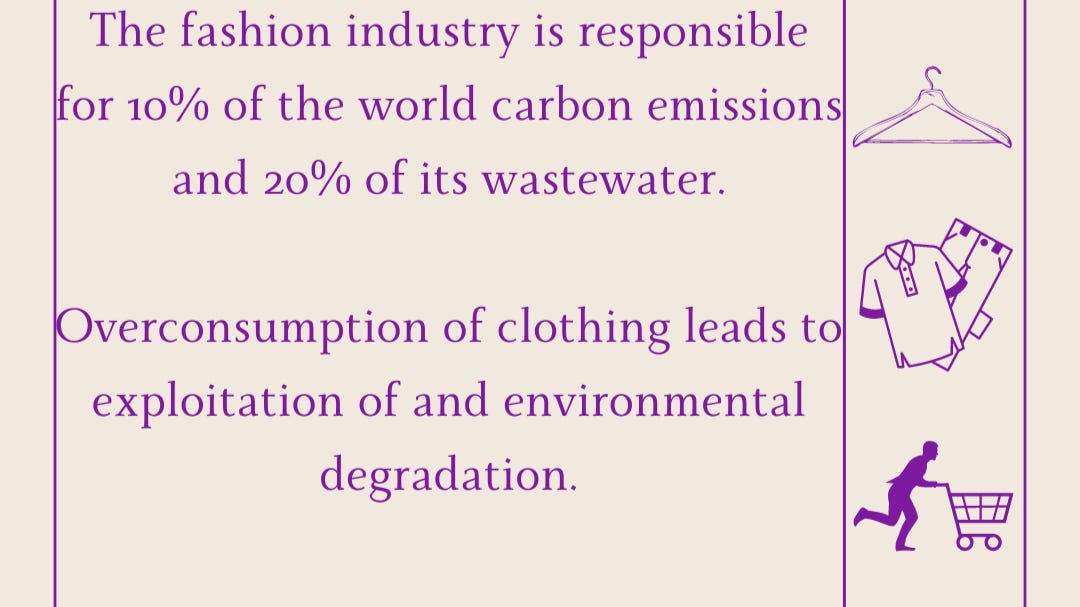
Ninety-two million tons. That’s how much clothing the world sends to landfill every year — the equivalent of a garbage truck full of textiles dumped every second, somewhere on Earth, all day, every day.
Here’s the harder number: of the 80 to 150 billion garments manufactured annually, somewhere between 8 and 60 billion are never sold at all. Not worn out. Not unwanted by a customer. Simply never bought — overproduced by a system built to manufacture first and ask questions later, where fewer than one in ten brands even disclose how much they make.
Add to that the human side of the equation: most garments are discarded after just seven to ten wears. People are buying 60% more clothing than they did fifteen years ago and keeping each item for half as long.
None of this is news to anyone who’s spent time around A4R. We’ve been platforming Gen Z journalism on displacement, on trauma, on the long tail of conflict for months now. But this story isn’t really about waste. It’s about who the industry built its rules for — and who it left out.
A Standard Built for a Building
Here’s the question that doesn’t get asked often enough: when an industry says a product is “ethically made,” what does it actually mean? Usually, it means someone audited a factory. A building with a roof, a shift register, a fire exit, a line of machines.
That model works, as far as it goes. But it has a blind spot the size of a continent. An estimated 300 million people worldwide — the overwhelming majority of them women — do this work not in a factory but from their own homes or small workshops. Hand-knotting rugs. Embroidering by lamplight. Stringing beads between school runs and cooking dinner. For generations, none of the standard compliance frameworks built for factories had anything coherent to say about them. Not because their work was lesser, but because nobody had designed a ruler that could measure a kitchen table.
That’s the gap a Gen Z researcher runs into almost immediately the first time they try to write seriously about ethical fashion. The instinct is to reach for the familiar checklist — audited factory, traceable supply chain, certified compliance — and apply it to artisan communities. It doesn’t fit. The category doesn’t exist yet for a woman who is, by any honest measure, more skilled than most factory workers the standard was written for, and who is being economically penalised for working in the way that lets her also raise her children and protect her own wellbeing.
Learning to notice that gap — rather than paper over it with the nearest available language — is itself part of what peer-to-peer training through A4R is built to teach. It’s a small, specific kind of literacy: the ability to see where a system’s categories run out, instead of assuming the system was complete.
Where the Gap Got Closed
This isn’t an abstract problem for us. It’s one we’ve spent years working inside.
The Swat Valley, in northern Pakistan, is one of the world’s great living centres of hand embroidery and high-end woollen textile work — embroidery and weaving that is, by heritage and by skill, Savile Row quality. It also endured the Taliban insurgency and a brutal military campaign to retake the region, and it’s the home valley of Malala Yousafzai. After the conflict, Zufi Deo co-founded the Swat Valley Guild with Wali, a local entrepreneur who had previously created 500 jobs in the region through an emerald mining initiative. Their aim was straightforward and, at the time, unfashionable: connect Swat’s artisans and weavers to the global marketplace, on terms that protected their heritage rather than industrialising it out of existence — while also confronting the fashion industry’s own problems with wastage and quality assurance from the inside.
The missing piece was exactly the gap described above: a way to verify and certify ethical practice for artisans working from home, in a sector built almost entirely around standards for factories. The Swat Valley Guild became a member of Nest, the nonprofit that had set out to solve precisely this problem — developing, in partnership with the International Labor Organization’s principles, the first universally applicable standards for decentralised, home-based supply chains anywhere in the world. As a Guild member, the Swat Valley Guild worked toward compliance with Nest’s Standards for Homes and Small Workshops, a process that helped formalise and organise the Guild’s own artisanal supply chain for the first time.
That mattered because it changed what was provable. A buyer in London or New York no longer had to take it on faith that home-based work was being done fairly. There was a standard — built specifically for this kind of labour, not borrowed awkwardly from a factory model — and a path to demonstrate alignment with it.
A Bag That Makes the Argument on Its Own
This article was written with the support of Debbie Moorhouse, a sustainable fashion designer who has spent years working on the same question raised above: how a piece is actually made matters as much as how it’s marketed. Through our support, she co-designed an emerald clutch bag with the Swat Valley Guild — built around the same combination Wali had identified at the Guild’s founding: hand embroidery and weaving of Savile Row quality, paired with emeralds sourced from the same valley.
It’s a small object that makes a large argument: that craftsmanship this precise doesn’t need to imitate luxury, because it already is luxury — it has simply been priced, marketed, and distributed as though it weren’t.
A garment produced this way carries a different relationship between maker and buyer than anything fast fashion can offer. The artisan is named. The valley is named. The hands are named. There’s no 92-million-ton mystery at the end of its life, because nothing about its beginning was anonymous either.
Set that beside the fast-fashion numbers. A garment worn seven times before landfill, produced inside a system so opaque that even its own scale is a matter of estimate, versus a single object that can name its maker, her valley, and the designer who chose to work with her rather than around her. Same industry. Two entirely different relationships between maker and buyer.
What This Trains Gen Z To See
A4R’s vocational training exists to produce Vibers who can hold both halves of this story at once — the systemic critique and the human specificity — without collapsing one into the other. It’s not enough to feel moved by an artisan’s skill. It’s not enough to cite a damning statistic. The training is in connecting them: understanding that “92 million tons of landfill” and “a woman in Swat being paid 25% above the going rate for her work with us” are not two separate stories but one story, told from opposite ends of the same broken system.
That’s a different kind of content literacy than most of the industry is teaching young creators right now — and it’s the reason this work doesn’t read like a brand campaign. It reads like an investigation that happens to end somewhere hopeful.
Where This Goes From Here
The standards exist now. The proof of concept exists now — in Swat, in a clutch bag carrying real emeralds and real craft from a named valley into the global marketplace, in a partnership that predates most of the industry’s current conversation about overproduction. What’s still being built is the pipeline of people who know how to find these stories, verify them, and tell them honestly to a generation that has every reason to be skeptical of “ethical” as a marketing word.
That’s the work. Buy the craft. Train the storyteller. Close the gap the standard forgot.
Join the conversation
The A4R Media Hub is co-created by Gen Z, for Gen Z — on the issues that matter most, made by young people who refuse to look away.
🔗 Explore our latest work at arts4refugees.com
This piece was produced as part of the Ink & Ashes series at the Arts4Refugees Media Hub, in collaboration with the BizGees community and the Gen Z Vibers co-creating it.
Thank you for reading an A4R 🎨 Post. Don’t forget to visit our gaming art here. Every purchase scales our impact and pays our bills.
