

Summary: A4R Media is a Gen Z co-created journalism platform built around participation, citizen storytelling, and peer-to-peer digital culture. This article explores why traditional media lost Gen Z, how gaming normalised collaborative storytelling, and why AI and Web3 make A4R Media a working model for the future of journalism.
Reading time: Approximately 5 minutes
Journalism Didn’t Lose Gen Z. It Failed to Keep Up.
For years, media companies have been asking the wrong question: “How do we get Gen Z interested in the news again?”
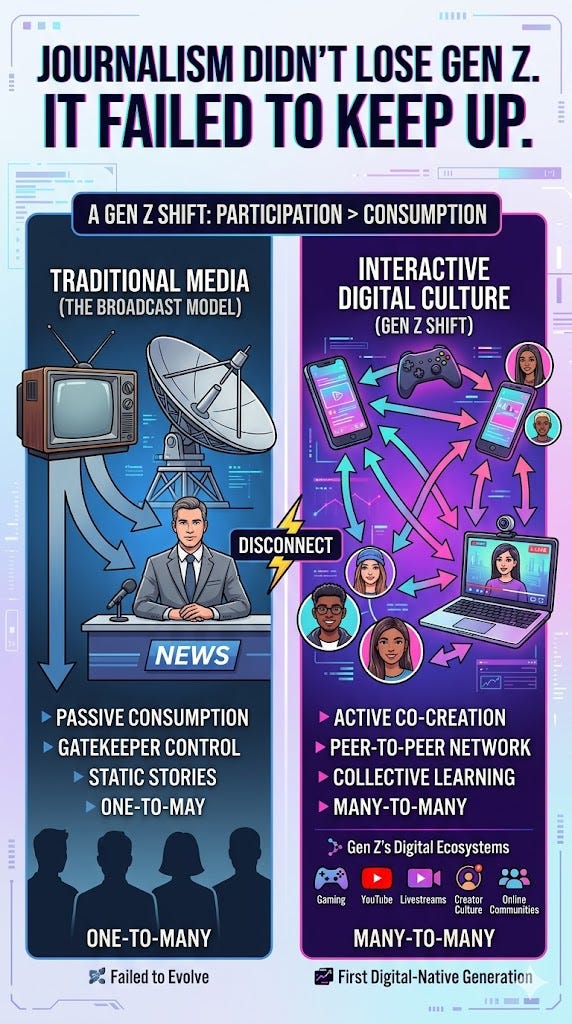
The reality is more fundamental than that. Gen Z did not abandon journalism. Journalism failed to evolve fast enough for a generation raised inside interactive digital culture.
This is the first truly digital-native generation in history. They grew up inside ecosystems shaped by gaming, YouTube, livestreams, creator culture, online communities, memes, and social platforms. They learned through participation rather than passive consumption. They are comfortable asking questions, challenging narratives, cross-checking information, and learning collectively in real time.
Traditional media was built around broadcasting. Gen Z grew up around interaction. That mismatch is the real story.
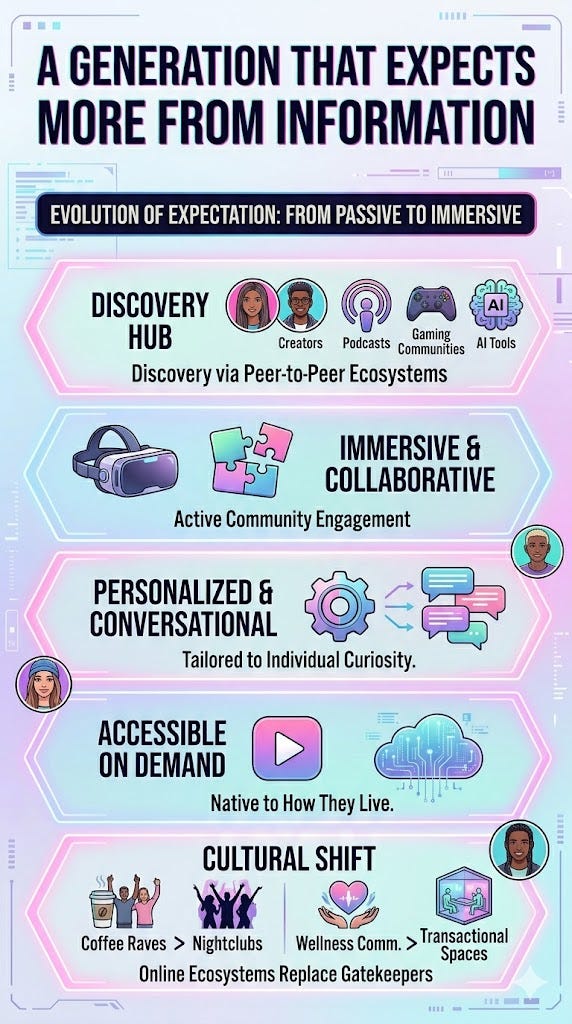
A Generation That Expects More From Information
Today, younger audiences increasingly discover information through creators, podcasts, gaming communities, social platforms, AI tools, and peer-to-peer digital ecosystems — not legacy news institutions. But this shift is not simply about attention or distribution channels. It is about expectation.
Gen Z expects information to be conversational, immersive, collaborative, personalised, and accessible on demand. They do not just consume stories. They engage with them.
Broader culture has already adapted around them. Coffee raves are replacing nightclub culture. Wellness communities are replacing purely transactional social spaces. Online ecosystems are replacing gatekeeping institutions. Identity is increasingly shaped through creativity, collaboration, and digital participation.
They are not asking for media to be simplified. They are asking for media to be native to how they live.
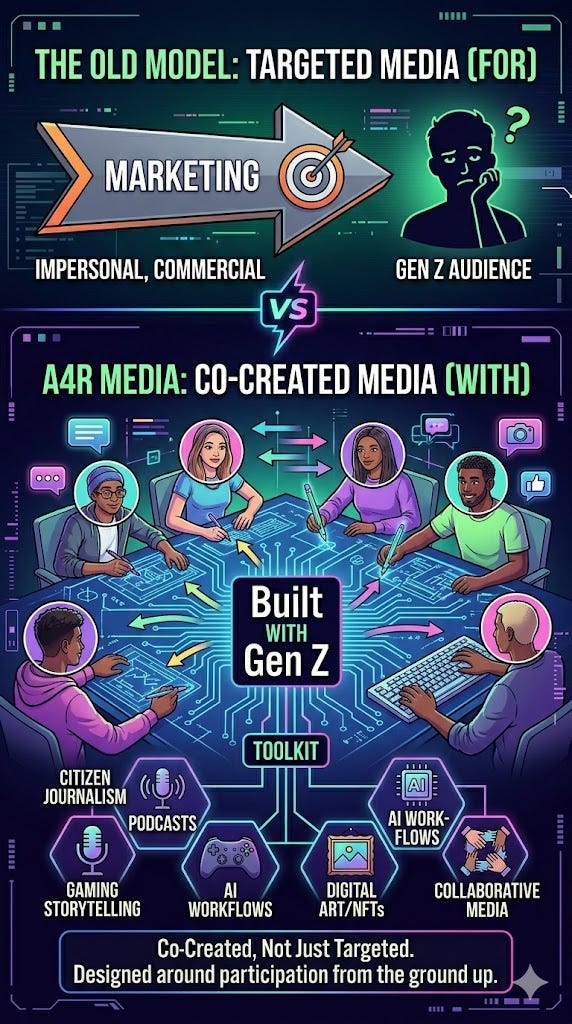
A4R Media: Co-Created, Not Just Targeted
This is where A4R Media becomes more than an experiment.
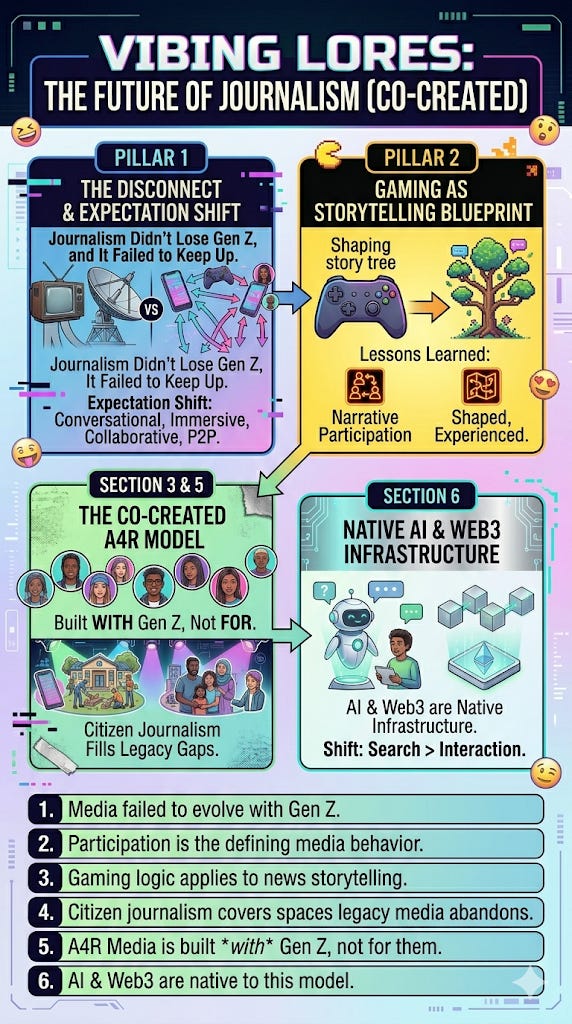
A4R Media was not built for Gen Z. It was co-created with Gen Z. That distinction is critical, because it changes the entire structure of what the platform represents.
It is not a traditional media organisation trying to reach young people. It is a Gen Z-shaped media ecosystem built with them, inside their behavioural reality. And that is exactly why it works as an example of what comes next.
Through citizen journalism, podcasts, gaming-inspired storytelling, AI-supported workflows, digital art, NFTs, and collaborative media experiences, A4R Media is built around how digital-native creators naturally think, create, and share. It is designed around participation from the start — not retrofitted for it.
What Gaming Taught a Generation About Storytelling
Gaming culture is one of the clearest foundations of this shift.
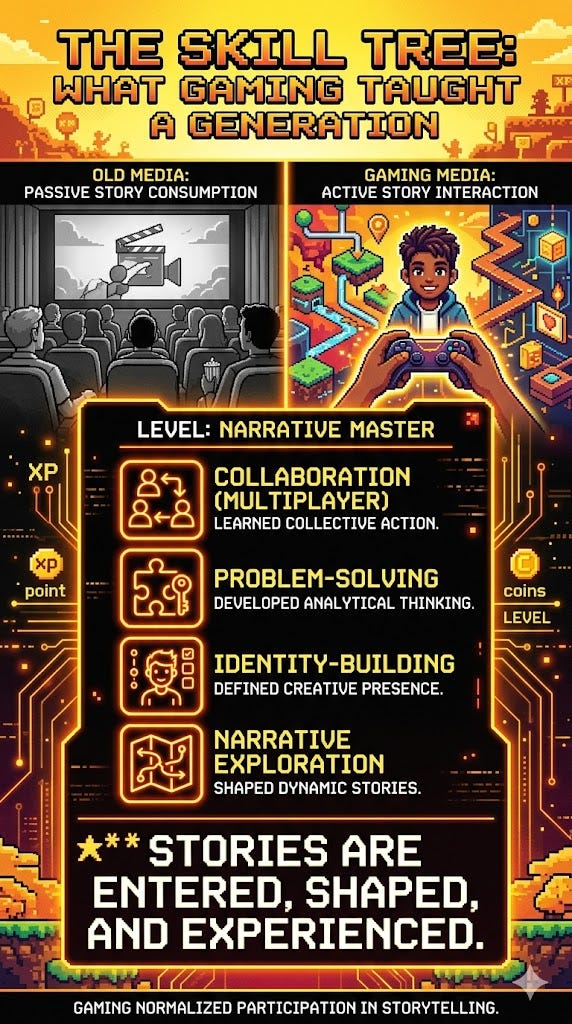
For Gen Z, gaming was never just entertainment. It was a learning system, a social network, a creative space, and a storytelling environment all at once. It taught collaboration, problem-solving, identity-building, and narrative exploration in ways traditional media never could.
Gaming normalised participation. It taught a generation that stories are not only consumed — they are entered, shaped, and experienced.
A4R Media applies that same logic to journalism and storytelling. Instead of treating audiences as passive readers, it treats them as contributors, collaborators, and co-creators of narrative.
Citizen Journalism and the Stories That Get Left Behind
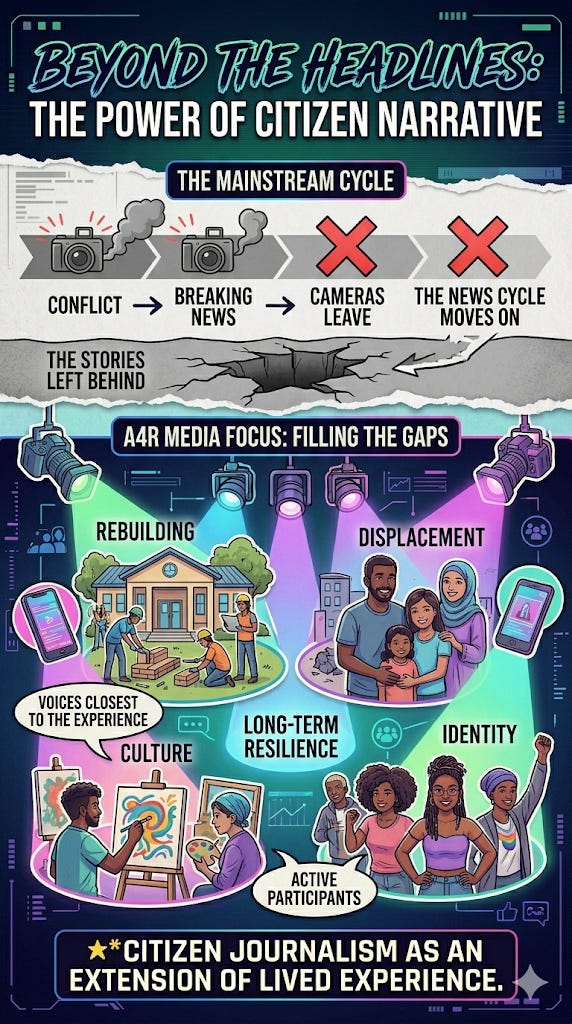
This is where citizen journalism becomes powerful again — not as a replacement for professional reporting, but as an extension of lived experience, especially in contexts that traditional media struggles to sustain over time.
Conflict may dominate headlines while it is breaking news. But rebuilding, displacement, identity, culture, and long-term resilience often disappear once the cameras leave. A4R Media focuses precisely on those gaps — and does so through the voices of those closest to the experience.
That is where co-creation becomes essential. Because Gen Z is not a passive audience waiting to be informed. They are active participants in how information is produced, shared, validated, and understood.
AI, Web3, and the Infrastructure Gen Z Already Lives Inside
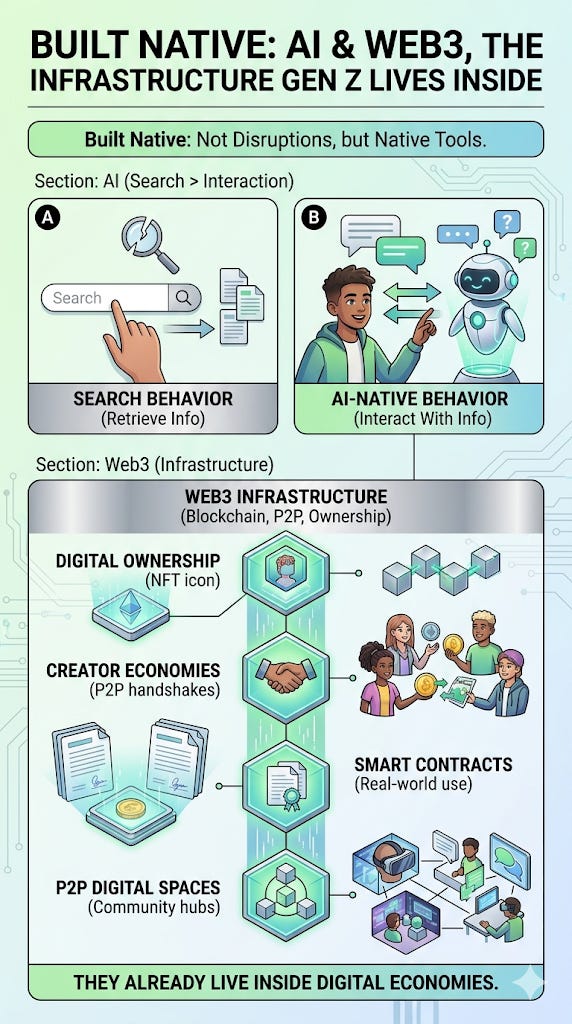
This is also why AI matters in this ecosystem. Search-based behaviour trained people to retrieve information. AI-native behaviour trains people to interact with it. That shift makes journalism more conversational, more adaptive, and more responsive to individual curiosity.
At the same time, Web3 technologies are steadily moving into mainstream systems. Financial institutions are exploring blockchain infrastructure. Bitcoin is globally recognised as a legitimate financial asset. Smart contracts are beginning to be applied in real-world contexts. Digital ownership and creator economies are becoming structurally embedded in online culture.
For Gen Z, none of this feels foreign. They already live inside digital economies — through games, creator platforms, online communities, and collaborative digital spaces.
This Is What Journalism Looks Like When It Evolves
A4R Media sits directly at the intersection of all of these shifts. But what makes it different is not just the tools it uses. It is the way it was built — co-created with the very generation it serves.
That means it is not guessing how Gen Z behaves. It is reflecting how Gen Z already behaves.
It is not a media platform trying to reach Gen Z. It is Gen Z building media itself.
And that changes everything.
Thank you for reading an A4R 🎨 Post.
Don’t forget to visit our gaming art here. Every purchase scales our impact and pays our bills.


