

Côte d’Ivoire is replacing colonial street names with local figures to foster national unity following decades of civil conflict. While critics cite the $17 million cost, the project aims to boost economic development through formal addressing and replace French linguistic dominance with Ivoirian pride, reclaiming the nation's post-colonial identity.Change on the Streets of Abidjan: A New World Approaches
There’s a photo. One man balances on a ladder. Another, standing below, holds up a new road sign to be drilled into place. Others watch on as the placard is carefully lifted and positioned. Avenue Noel Nemin it reads - Côte d’Ivoire’s minister for Justice between 1987 and 1990. His name replaces one of a colonial official now lost to history. This is just one example of a wider road renaming programme, which aims to generate national unity and to boost the country’s growth and development.
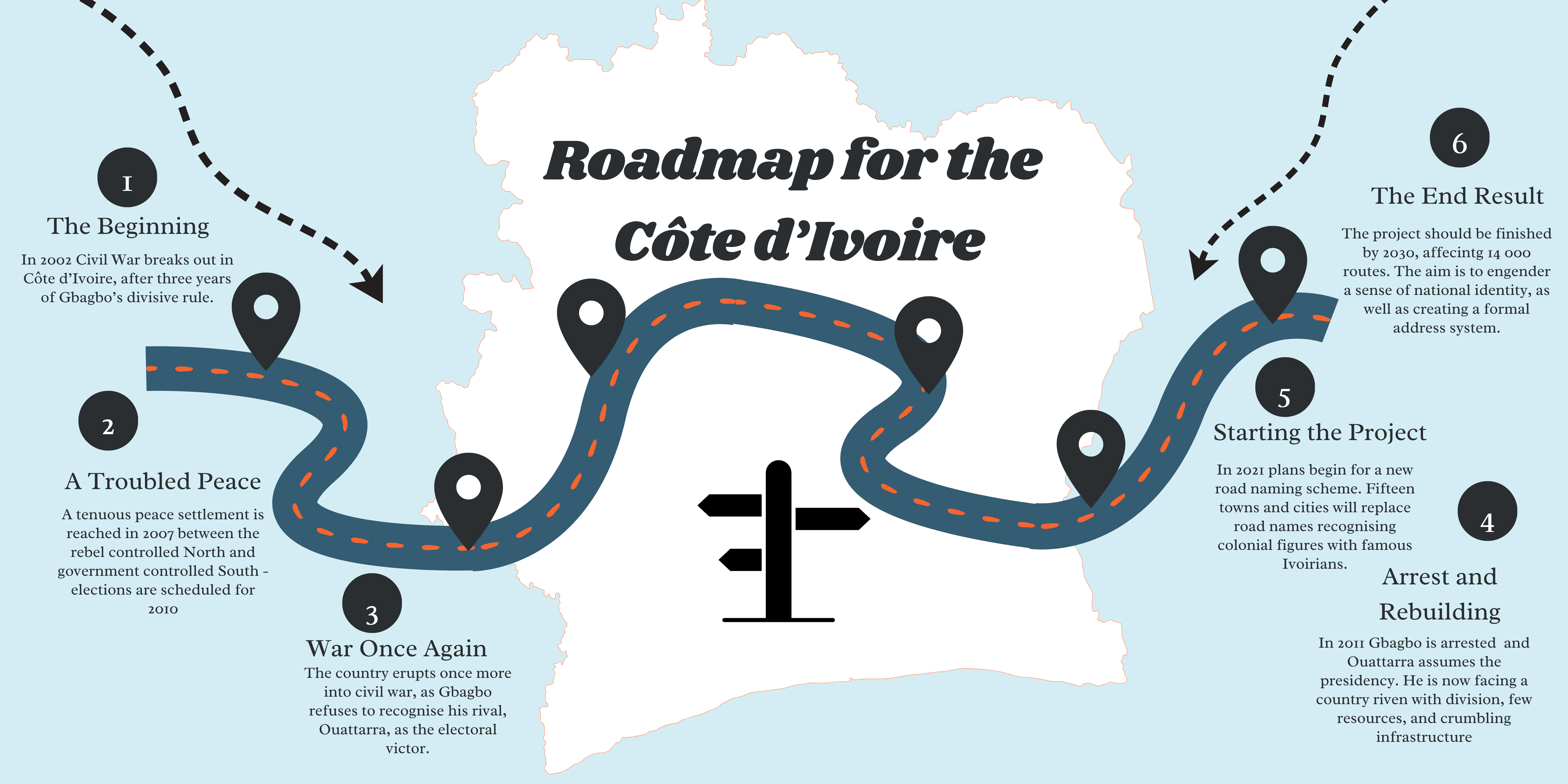
Until 2002, Côte d’Ivoire was the leading economic force in West Africa. However, in September of that year a coup erupted, splitting the country along North/South lines. The election of President Gbagbo in 2000 had brought about an era of divisive politics. Gbagbo exploited the concept of ‘ivoirité’ to marginalise Northern Muslim and immigrant communities. After two years, many had had enough. An initial rebellion led by a few soldiers in the North spiralled into a full blown civil war, displacing 800 000 people.
A tenuous peace was reached in 2007. But the situation broke down again in 2010 when President Gbagbo refused to recognise the victory of his rival, Ouattara, in the voting booths. In 1999, Ouattara had been disqualified from running due to his Burkinabé origin. But in 2010 he was internationally recognised as the electoral victor. This sparked the country’s second civil war, leaving around 3 000 dead. After 10 years of unrest, disruption, and division Gbagbo was arrested in 2011. Ouattara then assumed the presidency. Nevertheless, division remained. In 2008, amidst the ongoing crisis, a street vendor named Prospère told American sociologist Jordanna Matlon, “I was born in Abidjan [...] I have never known my country but I know I am Burkinabé”.
According to anthropologist Professor Sasha Newell, “national identity for the average Ivoirian was more a relationship of alterity than identity, a negotiation with the culture and language of the former colonizer.” Today in Côte d’Ivoire, many have adopted inferiority complexes towards their ethnic languages. In a Keynote Address delivered at the Annual Conference of Linguistics, Professor Alamin Mazrui stated, ‘Centuries of French colonialism have resulted in Ivoirians feeling lesser of themselves’. In a recent study conducted in the city of Bouaké, 34.37% of students said they cannot speak their ethnic language, while 59.37% usually speak French. There are four major groups of ethnic languages in Côte d’Ivoire: Mandin, Gu, Kry, and Kwa-Akan - yet the dominance of the French language has not changed since independence sixty-five years ago.
The exploitation of ‘ivoirité’ by Gbagbo, the North/South divide created by the civil wars, and the country’s colonial legacy have meant there remains a deeply entrenched sense of division and fragmentation in the Côte d’Ivoirian community, despite almost fifteen years of peace. In order to progress on the pathway to recovery the Côte d’Ivoire needs to generate a sense of Ivoirian identity. An identity which is not predicated on exclusion or alterity, but which rather unites its citizens.
There is one project currently addressing this problem. As of March, Côte d’Ivoire’s largest city, Abidjan, has changed many of its street names as well as adding in new ones. Roads once named after French Presidents like Général de Gaulle and colonial administrators such as Triechville now celebrate Ivoirian figures: Philippe Yacé, a post-independence politician, and author Germain Coffi Gadeau. The project is directed by Alphonse N’Guessan. He believes a name ‘must reflect our history, our culture’. Acknowledging Ivoirian politicians, scientists, artists, and athletes encourages pride in the Côte d’Ivoire. Another urban planner commented ‘it is important for Africans to identify with the city’s development’. It is at this moment that Côte d’Ivoire has the chance to reshape its identity. With such a young population, 75% under 35, the country can establish an identity based on its post-colonial history and achievements. An identity that includes all Ivoirian citizens regardless of ethnicity or immigrant status.
However, some are critical of the government’s $17 million spend. The country’s healthcare system ranks 31 out of 55 African countries, youth literacy rates (ages 15-24) are at 67%, and the country is 162 out of 189 on the Human Development Index (HDI). Questions are rightly being asked as to whether there are not other priorities which come before road names. However, calling this project symbolic not only underestimates the value of national identity and pride, but it also overlooks a whole wealth of social advantages the overhaul will indirectly support.
The project is on track to finish in 2030 and will give 14 000 routes formal addresses in fifteen towns and cities. To understand why this is so crucial to Côte d’Ivoire’s development it is helpful to use a human needs model. Seven fundamental human needs have been identified, they are: safety/security and survival; understanding; connection and acceptance; contribution/participation; esteem, identity, and significance; self-determination, freedom and justice; self-actualisation and self-transcendence. These needs should be present in all societies, but often in post-conflict communities they are lacking and hinder recovery. By fulfilling these needs governments and leaders can rebuild a stable community, leading to a more contented population. Côte d’Ivoire’s decision to change its street names fuels each of these seven categories.
Starting with the first human need: safety, security, and survival. In a city with addresses, emergency services will be much more efficient. Able to reach more people more quickly, survival rates and public safety will improve. Addresses will also benefit delivery and communication services. Parcels, packages and letters can be distributed efficiently and accurately. This will make the Côte d’Ivoire more attractive to business, stimulating the economy.
Largely due to fraud, the tax burden is only around 13.6% in the Côte d’Ivoire. This is significantly below Africa’s 16% average. However, addresses will help the government to conduct a housing census. This will facilitate accurate assessment of residents and their assets, leading to a better tax system. Proper addressing will facilitate effective taxing. Leading to more funding for schools, hospitals, and public services.
Many Abidjan residents welcomed the development. They looked forward to helping the younger generation learn about and understand their past. Frank Herve Mansou, a thirty-one-year-old technician, said he was pleased that ‘in the future, we can explain to our children who is who’. Jean Bruce Gneple, a salesman, stated, ‘President Félix Houphouët-Boigny was and will remain in the memory of all Ivoirians as the first man of Ivory Coast, so this is a tribute to him, and we are also proud of it’. This way, Côte d’Ivoire can create a communal sense of identity. Younger Ivoirians will feel connected to their history and to other citizens, generating pride for their country and a sense of belonging.
With an address, banks will lend money, boosting self-determination, freedom, and self-actualisation. With the support of a bank loan, Côte d’Ivoirians will be able to pursue passion projects and embark on business ventures. They can decide the trajectory of their lives and reach their potential.
Replacing colonial figures also gives a sense of justice, and replacing them with Ivoirian names drives self-actualisation and self-transcendence. Although this may seem idealistic, it is nevertheless important to show citizens that achievement is possible. Reminding Ivoirians of their predecessors’ successes may boost confidence and motivation, fueling a unified drive to grow and develop the country.
However, the one question mark that hangs over the project is exactly how representative of marginalised communities it will be. The results are currently looking mixed. Although there’s some emphasis on celebrating female Ivoirians, like champion sprinter Marie Josée Ta Lou-Smith and Côte d’Ivoire’s first First Lady Marie-Thérèse Houphouët-Boigny, other marginalised groups appear to be lacking. There has been criticism of the predominance of politicians in the renaming process. And no LGBTQ+ people have been recognised yet either. However, the project’s collaborative nature is often emphasised. Officials underline their consultation of experts, local figures, civil society groups, and local traditional authorities. And significantly, people of differing ethnicities are being represented. Yacé was Baoulé, the country’s central/Southern ethnicity. Whereas, celebrated musician DJ Arafat was Mandé, a Northwestern ethnic group. By encouraging contribution and participation from a wide range of people and representing differing ethnicities, this project is tackling Côte d’Ivoire’s biggest division. It is creating a sense of belonging for all, and helping to stabilise and solidify an inclusive Ivoirian identity. Ivoirians finally have the chance to tell their nation’s story their way.
Changing the street names in Abidjan is not just a symbolic gesture. It is a major motivator for Côte d’Ivoire to achieve self-actualisation. Not only enhancing economic growth, but boosting Ivoirian national pride, esteem, and belonging, creating a community that drives people to make Côte d’Ivoire thrive.
Bibliography
https://africabriefing.com/cote-divoire-drops-french-street-names/
https://biographycentral.com/biography/philippe_yac%C3%A9
http://britannica.com/place/Cote-dIvoire
https://www.ft.com/content/687a9518-0edc-4e2c-bfd6-ceff06bce353
https://www.servantsuniversity.com/the-7-fundamental-human-needs/
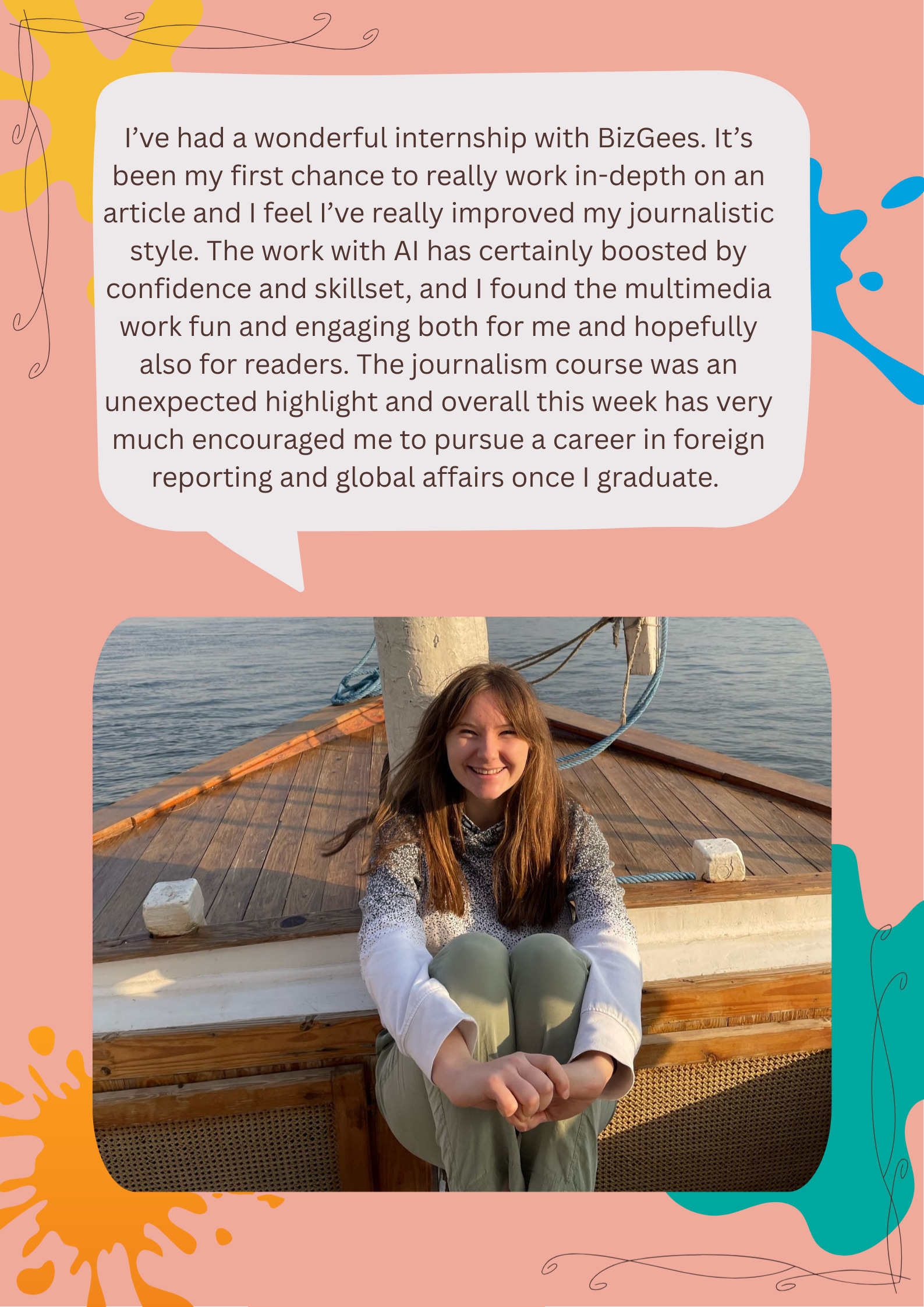
In this episode Nancy discusses the post conflict experience of Côte d’Ivoire and the issues of identity in healing process of a nation. She is a Citizen journalist with us on a placement organised with Oxford University Career Services.
Thank you for reading an A4R 🎨 Post. Don’t forget to try out gaming art NFT’s here. Every purchase scales our impact and pays our bills.


