

Conflict is over, how did the Taliban treat minorities in Afghanistan
“I don’t believe the Taliban, because I think they’re a terrorist group,” said Sitara, a university student currently studying in Hong Kong. Sitara belongs to the Hazara community, one of the most persecuted ethnic minorities in Afghanistan.
Just weeks before the Taliban’s takeover of Afghanistan in 2021, she made a final visit to her home in Ghazni province. Before the trip, her family warned her about the risks, given the country’s increasingly unstable political situation. While she was there, Sitara recalled hearing gunfire near her home almost every day. “People still believed in the government,” she said, “but sadly, the government practically sold the country to the Taliban.”
Sitara explained that although the Taliban initially promised to allow women to work and study, she never trusted their intentions. “I don’t believe the Taliban because I think it’s just a short-term strategy to make the international community accept them as a legitimate government,” she said.
The situation, she added, is especially dire for women and minority groups. “They’re killing minorities and people on the streets,” she said, describing the violence that began as early as 2021. Out of fear of persecution, Sitara’s mother even burned all documents that could reveal her daughter’s education or foreign connections.
Tragically, Sitara believes that visit may have been her last. “I don’t think I can go back now,” she said quietly. “If I go, there’s a possibility I’ll be killed.
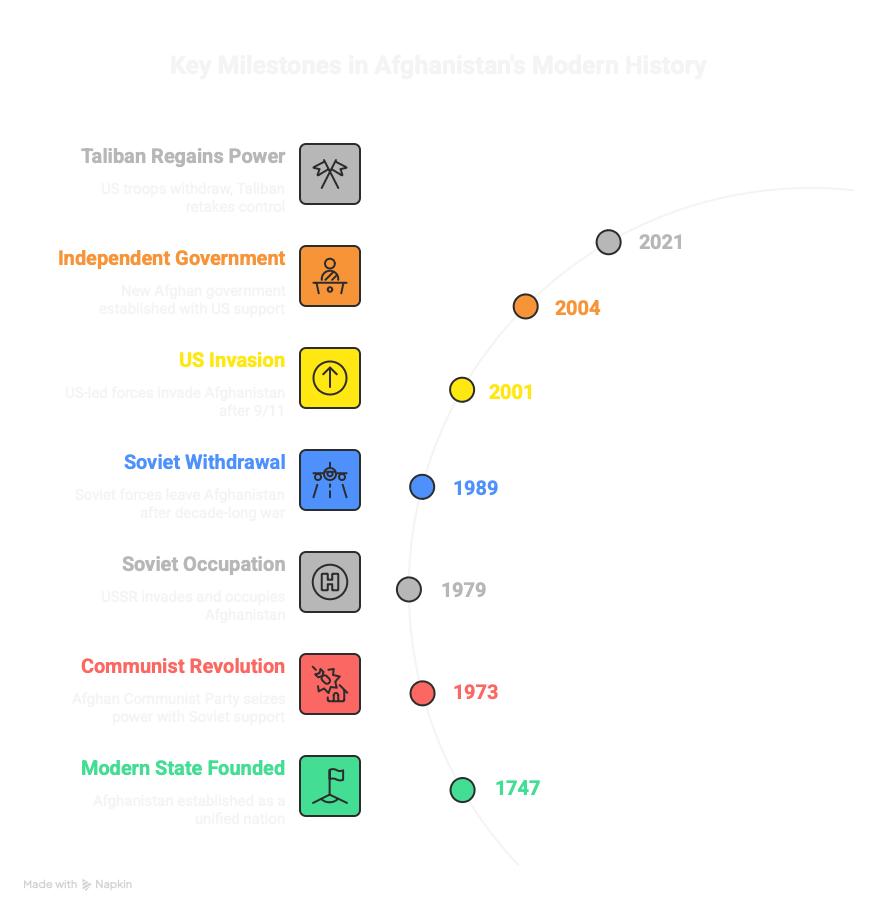
Afghanistan has a turbulent history spanning centuries. The modern state was founded in 1747. Civil war of succession and fighting against British colonialism ensued. The hard-fought independence of Afghanistan, unfortunately, was short-lived--it only lasted half a century. After a revolution led by the Afghan Communist Party, backed by the USSR, the country was occupied and heavily influenced by the USSR between 1973 and 1989. Once the Soviet Union had left Afghanistan, the population was wary of centuries of war and unrest, so they did not resist Taliban rule. However, due to the Taliban’s connection with Al Qaeda and Osama Bin Laden, the US invaded and soon took over the country and established an independent Government in 2004. This finally gave women and the underrepresented ethnicities a voice.
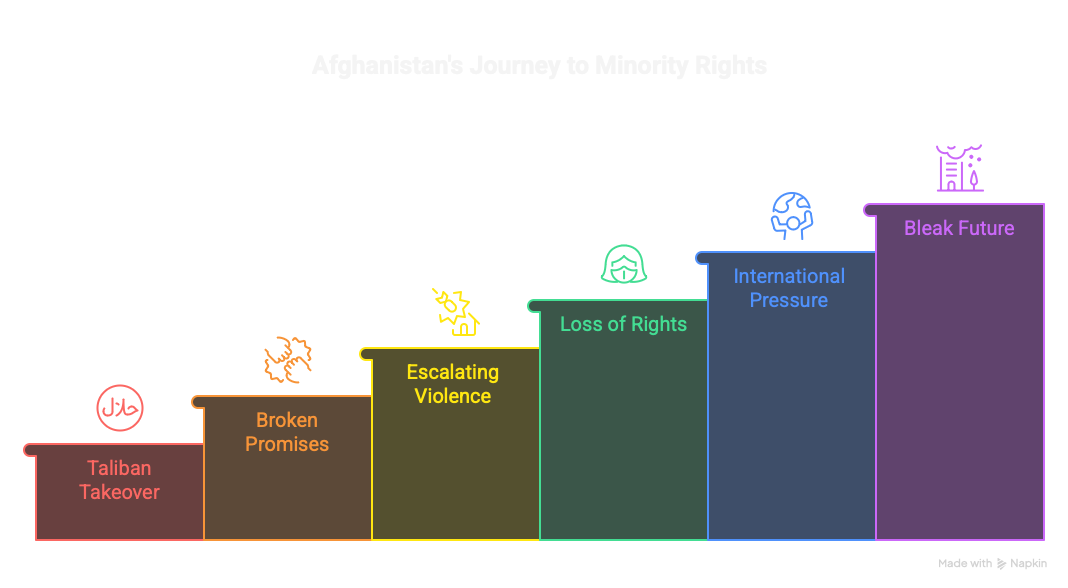
But the progress ended in 2021, after US troops withdrew from the country and the Taliban regained power. Just like Sitara predicted in 2021, the Taliban’s promise to protect the rights of women and minorities is indeed just window dressing. Under Taliban rule, women lost the right to work, go outside, get an education, and even to speak in public. Ethnic and religious minorities and the LGBTQ community in Afghanistan faced escalating levels of persecution. They became subject to arbitrary arrest, torture even execution.
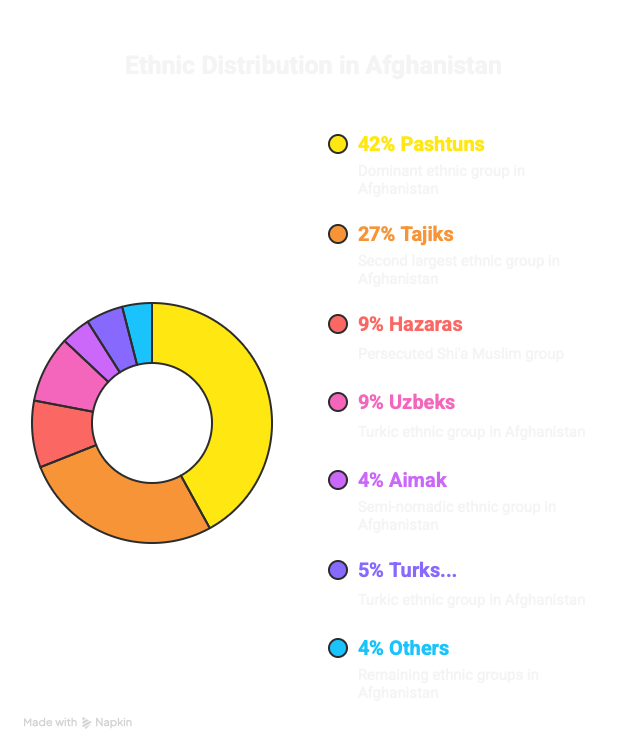
Afghanistan is an incredibly ethnically diverse country, home to many ethnicities and religions. It includes Pashtuns (42 percent), Tajiks (27 percent), Hazaras (9 percent), Uzbeks (9 percent), Aimak (4 percent), Turks (3 percent), and Baloch (2 percent). Among this diverse population of 41 million, Pashtuns are the dominant ethnic group in Afghanistan. Taliban rulers are also Pashtuns. Although the official religion and most of the population are Muslims, a variety of religions are practised among the minorities, such as Christians, Sikhs, Hindus and Baha’i. However, since the Taliban came into power in 2021, religious freedom has been severely restricted. Nowadays, the entire population is being coerced to live under the strict interpretation of Sunni Islam.
“Afghanistan is a nightmare for religious freedom—and other fundamental human rights.” Out of the minority groups, Hazaras are the most persecuted since the establishment of the empire. This can be due to their practice as Shi’a school of Muslims. After centuries of systematic discrimination and forced migration, the population in Afghanistan declined sharply. Their situation has only worsened since the Taliban came to power in 2021. They lost their representatives in government, and also faced escalating violence from the Taliban as well as ISIS-K ( Islamic State – Khorasan).
“There is a genocidal campaign against the Hazara under the Taliban’s authority.” Said Azra Jafari, the first female mayor in Afghanistan’s history from the Hazara community. She voiced her concern regarding the treatment of ethnic minorities in Afghanistan. In her youth, she fled to Iran under the first Taliban rule from 1996-2001, and she constantly feared Taliban and ISIS attacks during her time in office as a mayor. In another interview with EWTN, she also said that being a woman from the Hazara minority made her a “third-grade person”. Although she is currently in exile, she encouraged minority women in Afghanistan to keep fighting for their rights.
Indeed, since the Taliban takeover, Hazara women faced ‘intersecting forms of discrimination’--are targeted on the grounds of both their gender and their ethnicity and religion. Talibans used ridiculous excuses like ‘bad hajab’ to arrest and abuse Hazara women. Mursal was a Hazara woman who was detained due to ‘ bad hijab’. She was beaten, had her head submerged under water and taunted with racially discriminatory remarks. In the videos released to show the arrest of Hazara women, they are all wearing hijabs covering their whole face. Unfortunately, even within women’s rights groups, Hazara women faced discrimination from other ethnic groups of women. “There is no solidarity with Hazara women, and we have faced insult and humiliation.”
To make the situation worse, Hazara women is also facing deadly violent attacks from ISIS-K. Since Taliban takeover of the country in 2021, there have been 13 attacks against Hazara community, killing more than 700 people.
Taliban leaders were criticised for a complacent attitude towards ISIS-K attacks on Hazara communities.
The Taliban’s restrictions on the media made it nearly impossible for journalists to record the plight of ethnic minorities and share it with the outside world. Youtuber Joe Fazer, who recently travelled to Afghanistan, revealed that he had to leave the country within 24 hours due to fear that he might be arrested for filming. Indeed, since 8th Oct, the Taliban has begun imposing restrictions on social media platforms, severely curtailing the right to freedom of expression. Independent journalism remains vital for exposing abuses, supporting UN and ICC investigations, and giving voice to marginalised communities..
The violent attacks on ethnic minorities in Afghanistan had a devastating impact on their mental and physical health. Taliban withdrew financial support for victims of the violent attacks. For instance, a 16-year-old Safia became deaf and unable to speak after ISIS suicide fighters set off a bomb near her home. Her father, on a meagre wage, cannot afford to send her for hospital treatment. The mental scars of these violent attacks prevented the Hazara and Shia communities from exercising their fundamental human right, such as going to places of worship, work and education, for fear of an attack happening.
Although numerous government and NGOs are doing their best to help ethnic minorities in Afghanistan through exerting pressure on the Taliban government, the humanitarian assistance is far from adequate. Many NGOs like Human Rights Watch and Amnesty International have highlighted the fact that ethnic minorities in Afghanistan, especially the Hazara community, are facing crimes against humanity and even genocide.
Currently, there is a case in the International Criminal Court regarding Afghanistan, for its alleged crimes against humanity, and an arrest warrant has been issued for the supreme leader of Afghanistan, Haibatullah Akhundzada. However, ICC lacks the power to enforce this jurisdiction, making it a merely symbolic gesture
Without international pressure, ethnic minorities and marginalised groups in Afghanistan face a bleak future. Richard Bennett, Special Rapporteur on the human rights situation in Afghanistan, warned in early 2025 that “Intensifying Taliban repression, expanding discrimination against women and girls…violations against ethnic and religious…are stark warnings that things in Afghanistan are only getting worse.”
Continued global attention and press coverage are essential. Governments worldwide must hold the Taliban accountable if it seeks international legitimacy. Expanding refugee and asylum programs is also vital to protect those fleeing persecution.
And for readers who feel moved by these stories — you can help too. Donate to organizations such as Afghanaid, the Refugee Council, or ARAP (Afghan Relocations and Assistance Policy). Start a fundraiser, sign a petition, or raise awareness on social media.
Your action today can help make the future a little brighter for Afghanistan’s minorities.
Article written by Lisa Shi, Nov 2025
Biblipgraphy
Afghanistan: ISIS Group Targets Religious Minorities | Human Rights Watch. 6 September 2022. https://www.hrw.org/news/2022/09/06/afghanistan-isis-group-targets-religious-minorities.
Afghanistan: New Restrictions on Telecommunications Raise Further Rights Concerns, Say UN Experts. 2025. https://www.ohchr.org/en/press-releases/2025/10/afghanistan-new-restrictions-telecommunications-raise-further-rights.
Afghanistan’s Hazara Community Needs Protection | Human Rights Watch. 13 September 2024. https://www.hrw.org/news/2024/09/13/afghanistans-hazara-community-needs-protection.
Amit Kumar & Aayushi Malhotra. ‘Factoring Ethnicity in Taliban’s Quest for Legitimacy | GJIA’. Georgetown Journal of International Affairs, 17 April 2024. https://gjia.georgetown.edu/2024/04/17/factoring-ethnicity-in-talibans-quest-for-legitimacy-an-anthropological-rewiring-of-the-power-structure/.
Amnesty International. ‘Afghanistan: One Year of the Taliban’s Broken Promises, Draconian Restrictions and Violence’. 15 August 2022. https://www.amnesty.org/en/latest/news/2022/08/afghanistan-one-year-of-the-talibans-broken-promises-draconian-restrictions-and-violence/.
Amnesty International. ‘Human Rights in Afghanistan’. Accessed 12 November 2025. https://www.amnesty.org/en/location/asia-and-the-pacific/south-asia/afghanistan/report-afghanistan/.
Campbell, Lisa J., Pamela Ligouri Bunker, and Robert J. Bunker. ‘The Islamic State – Khorasan Province (ISK): An Assessment of Current Operations’. Small Wars & Insurgencies, 12 August 2024, 1–26. https://doi.org/10.1080/09592318.2024.2388897.
EWTN, dir. As Afghanistan Faces Famine, 1st Female Mayor Azra Jafari Discusses the Taliban | EWTN News Nightly. 30 August 2022. 5:38.
Fereshta, Abbasi. Religious Freedom in Afghanistan: Three Years After the Taliban Takeover | Human Rights Watch. 20 March 2025. https://www.hrw.org/news/2025/03/20/religious-freedom-afghanistan-three-years-after-taliban-takeover.
Joe, Faser . ‘I Travelled To Afghanistan... And Left Within 3 Hours’. 22 October 2025.
Kerami, Kaweh. Silenced Voices: The Fall of Press Freedom in Afghanistan | OHRH. n.d. Accessed 12 November 2025. https://ohrh.law.ox.ac.uk/silenced-voices-the-fall-of-press-freedom-in-afghanistan/.
Moradi, Farkhondeh Akbari, Kobra. ‘Hazara Women: How Gender and Ethnicity Intersect in the Taliban’s Repression’. Just Security, 7 March 2024. https://www.justsecurity.org/93123/hazara-women-how-gender-and-ethnicity-intersect-in-the-talibans-repression/.
Newsweek. ‘Afghanistan’s First Female Mayor Speaks Out as Others Can’t | Opinion’. 9 October 2024. https://www.newsweek.com/afghanistans-first-female-mayor-speaks-out-others-cant-opinion-1966453.
Nina, Evason . ‘Afghan - Religion’. Cultural Atlas, 1 January 2019. https://culturalatlas.sbs.com.au/afghan-culture/afghan-culture-religion.
PBS News. ‘A Historical Timeline of Afghanistan’. 4 May 2011. https://www.pbs.org/newshour/politics/asia-jan-june11-timeline-afghanistan.
Poya, Dr Fawad. The International Criminal Court’s Pursuit of Accountability for Gender Persecution in Afghanistan: A Landmark Step for Justice (Part II) | OHRH. n.d. Accessed 12 November 2025. https://ohrh.law.ox.ac.uk/the-international-criminal-courts-pursuit-of-accountability-for-gender-persecution-in-afghanistan-a-landmark-step-for-justice-part-ii/.
Religious Freedom in Afghanistan: Three Years After the Taliban Takeover | Human Rights Watch. 20 March 2025. https://www.hrw.org/news/2025/03/20/religious-freedom-afghanistan-three-years-after-taliban-takeover.
Richard, Benett. UN Expert Warns of Intensifying Human Rights Crisis as Repression Deepens in Afghanistan. UN Human Rights Office of Commissioner. February 2025. https://www.ohchr.org/en/press-releases/2025/02/un-expert-warns-intensifying-human-rights-crisis-repression-deepens.
Situation of Human Rights in Afghanistan - Report of the Special Rapporteur on the Situation of Human Rights in Afghanistan (Advance Edited Version). A/HRC/55/80. UN Human rights , 2024. https://www.ohchr.org/en/documents/country-reports/ahrc5580-situation-human-rights-afghanistan-report-special-rapporteur.
South China Morning Post . ‘Afghan Student in Hong Kong Fears for Family Caught up in “Heartbreaking” Crisis Back Home’. 4 September 2021. 5:43.
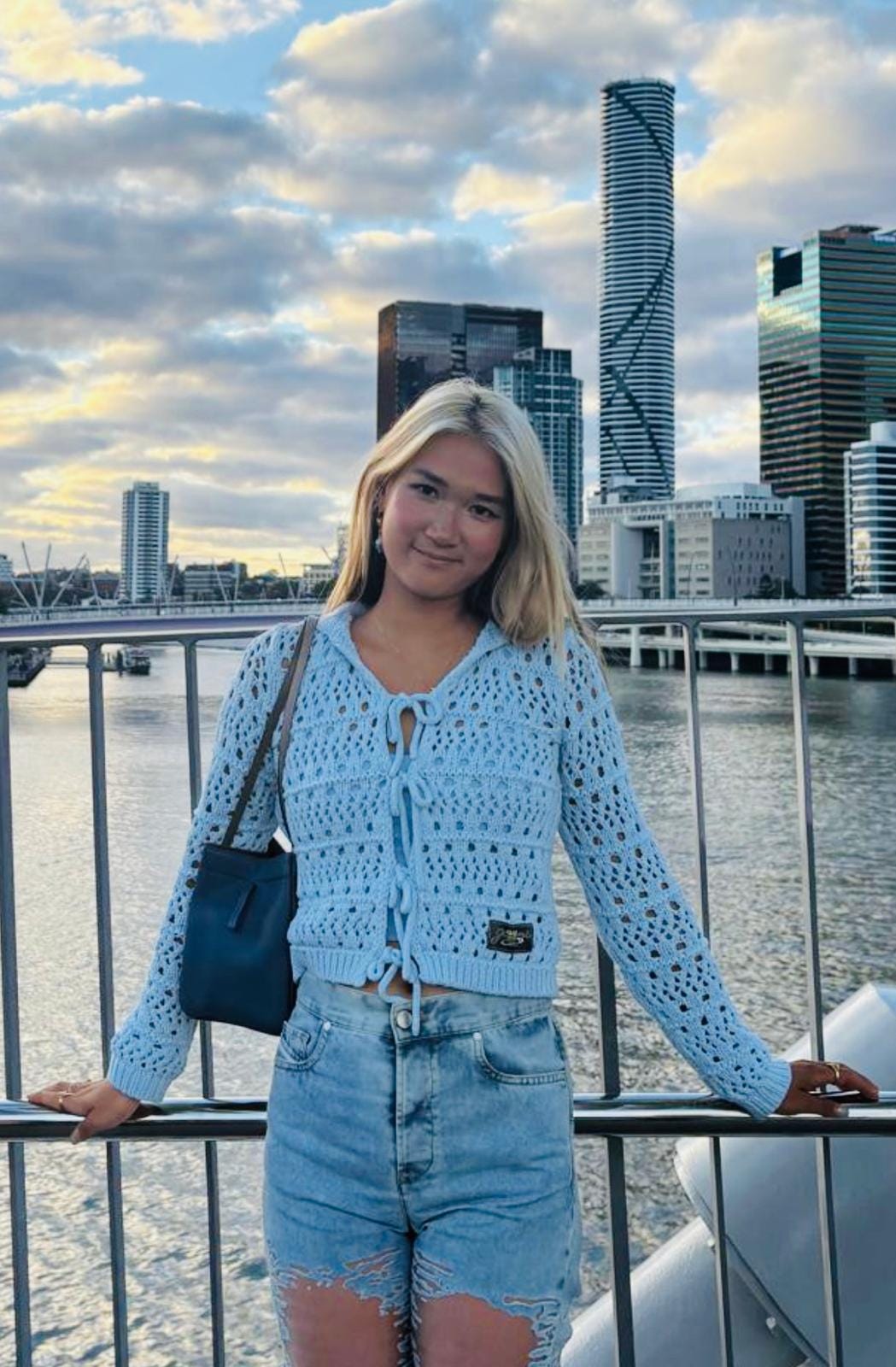
In this episode Lisa discusses the post conflict experience of Afghanistan and the experience of minorities under the Taliban. She is a Citizen journalist with us on a placement organised with Department of War Studies, King’s College, London.
Thank you for reading an A4R 🎨 Post. Don’t forget to try out gaming art NFT’s here. Every purchase scales our impact and pays our bills.


