

Forty-one years of conflict and 6 months of peace: Kurdish life in Türkiye after the PKK.
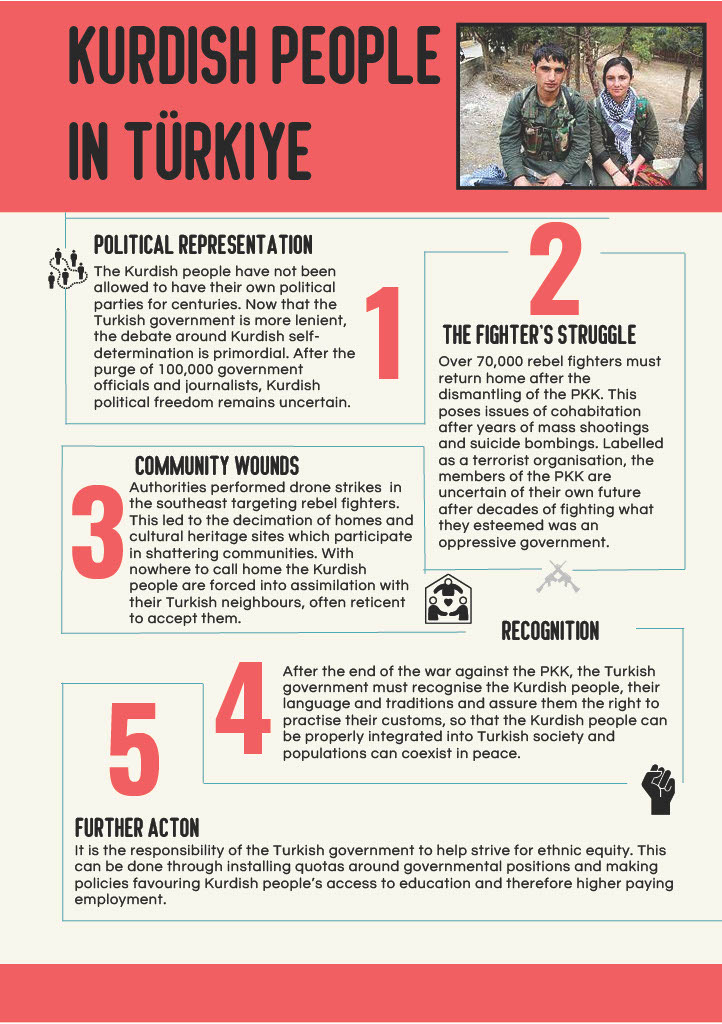
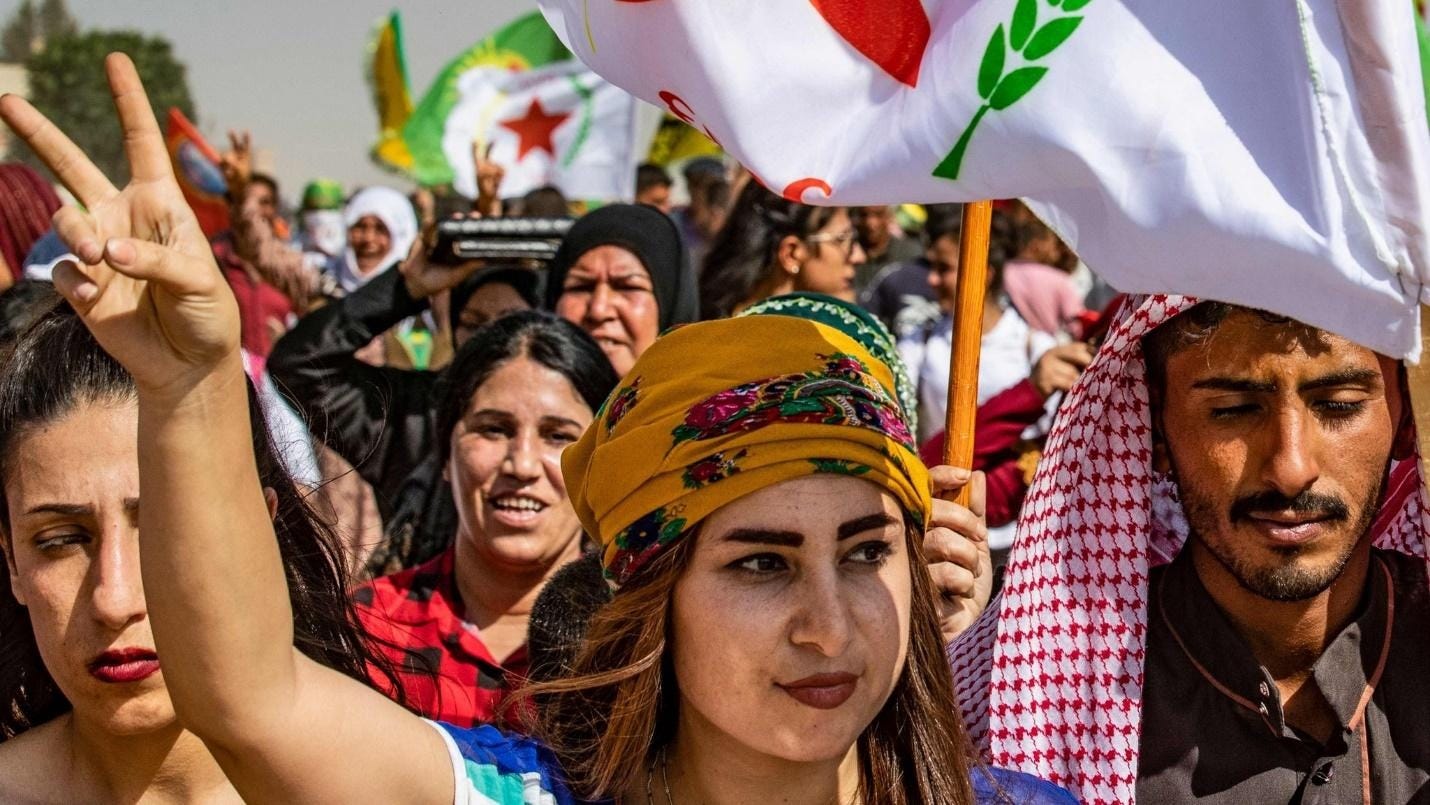
Figure 1: Turkey Vs Syria’s Kurds: The short, medium and long story (BBC, 2019)
Saida was 19 when drone strikes hit her village in Ghuzare, near the Turkish Syrian border, as Turkish authorities targeted the region for terrorist militants. Interviewed by Radio France, she described the rubble in her garden and the dust in her eyes. These attacks were common during the decades-long conflict between the Turkish government and the Kurdish Workers’ Party or PKK, labelled by that government as a terrorist organization. In May 2025, a ceasefire was declared, and the PKK announced its dismantlement after the imprisonment of its leader Abdullah Öcalan. However, questions remain about the Kurdish people and their rights in Türkiye after the long fight for cultural freedom and independence. How can populations that have been at war for so long finally coexist on the same territory, and what challenges do they face today?
The PKK was founded in 1978 as a secessionist group seeking Kurdish self-determination and socialism. Their original goal was to create a new State: Kurdistan, covering parts of Syria, Iran, Iraq and Armenia, but primarily in Türkiye. This desire for autonomy clashed with Turkish national interests, leading to armed conflict soon after its creation. This conflict lasted 41 years, causing the death of an estimated 40,000 people and a near coup in 2016. The conflict and the PKK’s creation stemmed from centuries of oppression of the Kurdish people, who were not recognised by their governments, and faced generations of assimilation and repression. Türkiye was especially harsh after World War I and the rise of Kemalist ideology, which called for a unified State. In the post-war period, laws were put in place to perpetuate what was seen as Turkish cultural domination. These laws prohibited Kurdish people from speaking their language, forming political parties, or having their own educational system. This situation persisted until around 2008 when there was a momentary desire for cooperation between the authorities and the Kurdish population. However, tensions remained. Although the PKK had abandoned the idea of a completely independent Kurdistan by the 21st century, they still aspired to a semi-autonomous region, with the freedom to practice their customs and teach their children their language. With the dismantling of the PKK after their defeat in combat, there are uncertainties regarding these demands. This article will cover concerns such as political representation and interests, cultural freedoms, and community rebuilding in the post-war period.
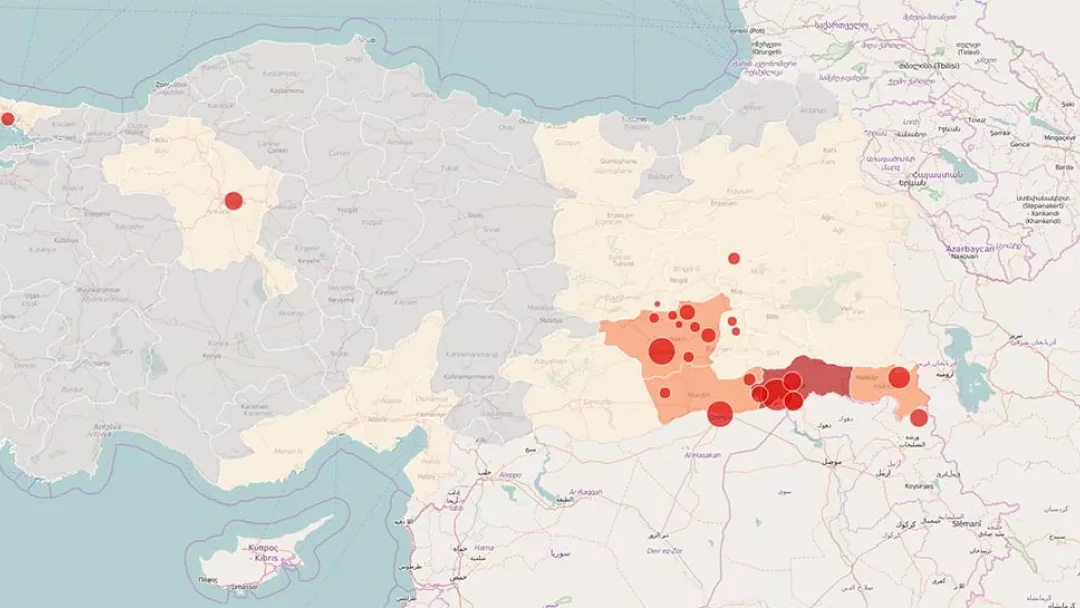
Figure 2: Turkey’s PKK Conflict: The Death Toll | International Crisis Group (2016)
Recep Tayyip Erdogan has been Türkiye’s president since 2014 but has been in government since 2003. He is a central figure in the battle against the PKK and the fate of the Kurdish people. His Justice and Development Party is conservative and emphasizes Turkish nationalism. Initially, there was lenience towards the Kurdish, leading to pro-Kurd parties like the People’s Equality and Democratic Party (DEM), now third in the polls. This advancement of pro-Kurdish sentiment is significant for Erdogan’s hold on power. Securing Kurdish support is vital for winning the next election, as they represent one fifth of the Turkish population. With the capture of the PKK’s founder Abdullah Öcalan, Erdogan has depicted himself as the sole hero against the PKK. Much of Erdogan’s notoriety rested on the perception that he was the only one who could defeat the PKK, often sacrificing democracy to do so. In 2016 after the attempted coup in the capital Ankara by the PKK, the government set out policies regarding Kurdish government officials. Around 100,000 Kurdish people were fired from mayoral or journalism positions. Approximately 50,000 people were detained without trial, and many newspapers and local parties were shut down. The Turkish court has also attempted on several occasions to pursue the DEMs for PKK affiliation, without evidence. These political purges damaged relations between the Turkish government and the Kurdish populations in the southeast. These regions are isolated by mountains and vulnerable to foreign influence from Syria and Iran, as well as the People’s Protection Unit, a PKK branch still aspiring to fight. The Turkish government must integrate the Kurdish people into the Turkish political sphere to regain popularity in these far-off regions. Today, there is anxiety regarding the peace process. The people are tired of ongoing tensions, and most of the Kurdish people no longer support the PKK; however, one in three Turks distrusts the peace process with the militants. The general conservatism and prejudice ingrained in Turkish society cannot be overlooked when discussing peace processes between communities. Most of the Turkish people still remain reticent about integrating Kurdish people, who are still greatly underrepresented in Turkish politics.
How then, can people live together on the same territory after so many years of political tensions and violence? After the attempted coup in 2016, 24,000 people were curfewed before being displaced in the district of Sur in Diyarbakir. Many testified to Amnesty International, detailing the conditions of their displacement. Most of the people who left saw their homes destroyed by drone strikes or pillaged. Although leaving home at the risk of returning to nothing is frightening, fleeing was unavoidable. During the curfews and lockdowns, it was reported that people had little to no access to food and water and could not go out due to imminent threats. Autonomous weapon systems indiscriminately target civilians and fighters, as well as civilian infrastructure such as homes, businesses and heritage sites. Many demands were made by Kurdish communities to the United Nations Educational, Scientific and Cultural Organisation (UNESCO) to help protect and rebuild classified edifices from warfare. The destruction led to the downfall of Kurdish culture as a whole. A shepherd interviewed by France Culture in the region of Qandil near Iraq reported that when Turkish soldiers took over rebel bases in the mountains, they would also cut down century-old fruit trees that were typical of the region and part of Kurdish heritage. Assimilation does not simply occur through policymaking; it is also a fight to undermine a culture by breaking down its communities and depleting its resources. This includes the resources necessary for survival and customs. After displacement, most people who had lived as tight-knit communities were now dispersed across Türkiye, mostly in big cities where they were culturally minimized, and 60% of homes were targeted for upscale refurbishment plans by the government. Fighting for rights and representation is much more difficult from a position of isolation. The Turkish government demoralised the Kurdish people by perpetuating systemic poverty. They lived in poor conditions with little access to education or high-paying jobs.
Peace is difficult when resentment persists. The war against the PKK was a particularly deadly one. The 2025 British Home Office report estimates 6,677 deaths since 2016, including 614 civilians and 4,409 PKK members. Most civilian casualties were due to bombings by the Turkish government, suicide bombers, and mass shootings. These attacks occurred almost daily and affected all members of society. As for the combatants, returning home post-conflict is incredibly difficult. Turkish authorities reportedly used torture, leaving serious psychological scars, but the most damaging impact of all is the enduring hatred for the government, which is difficult to shake after 40 years of belligerence. Artis International’s concept of devoted actors is important in understanding the state of mind of the 70,000 demobilized fighters. These individuals, often young men, have been indoctrinated in a hate campaign against the Turkish government for four decades. Getting rid of that anger will prove to be difficult. A mayor in the region of Diyarbakir who was suspended for putting up flyers for Kurdish self-determination told of how his son left to join the PKK promptly after his demotion due to a feeling of uselessness in “doing politics.” Living next to your neighbour when a child or parent has been killed in a government drone strike or in a suicide bombing is a struggle that endures after the ceasefires. Living with the reality of death and conflict becomes more difficult if the scars cannot heal in a world of repressed speech and forced cooperation.
The solutions needed are transitional justice and accountability from both sides for the atrocities committed. The Turkish government allows for only one form of memory, that of a collective national story. By classifying the PKK as a terrorist organisation, the State has total control over public discourse and the arrangements for dismantling the rebel group. If deemed necessary for citizens’ safety, the government can and has shut down most of the Kurdish voices of autonomy and cultural freedom, deciding by itself what can and cannot be said against it and the country. There is a pressing need for the Turkish government to recognise the Kurdish people, their language and their customs. Without this recognition, there can be no proper representation. Through quotas in government and policies that move towards higher education of Kurdish people, Türkiye can exist as a diverse multi-ethnical country. Until the veil of silence is lifted, communities will linger in their anger, and peace cannot prevail.
Bibliography:
After the PKK: Peacebuilding challenges in Turkey, Syria. RUSI (2025). https://www.rusi.org/explore-our-research/publications/commentary/after-pkk-peacebuilding-challenges-turkey-syria.
Amnesty International (2021) Turkey: Displaced and dispossessed: Sur residents’ right to return home - Amnesty International.
Conflict between Turkey and armed Kurdish groups | Council on Foreign Relations (2025). https://www.cfr.org/global-conflict-tracker/conflict/conflict-between-turkey-and-armed-kurdish-groups.
Danforth, N. et al. (2016) Turkey and the PKK after the failed coup. https://warontherocks.com/2016/08/turkey-and-the-pkk-after-the-failed-coup/.
Lazo, L. (2025) ‘Irak : après la dissolution du PKK, les Kurdes dans l’attente de la paix,’ France Inter, 20 May. https://www.radiofrance.fr/franceinter/podcasts/le-reportage-d-un-jour-dans-le-monde/reportage-du-mardi-20-mai-2025-4099718.
Les Kurdes, peuples en colère (2023). https://www.radiofrance.fr/franceculture/podcasts/serie-les-kurdes-peuples-en-colere.
Q&A | Disbanding the PKK: A turning point in Turkey’s longest war? | ACLED (2025). https://acleddata.com/qa/qa-disbanding-pkk-turning-point-turkeys-longest-war.
In this episode Sophie discusses the post conflict experience of the Kurds. She looks at life after the 41 year conflict between PKK and Turkey She is a Citizen journalist with us on a placement organised with Department of War Studies, KCL. This article was edited using Lex.page.
Thank you for reading an A4R 🎨 Post. Don’t forget to visit our gift shop here. Every purchase scales our impact and pays our bills.


