

Past, Present and Future: Integrated Education as a Tool of Post-Conflict Reconciliation
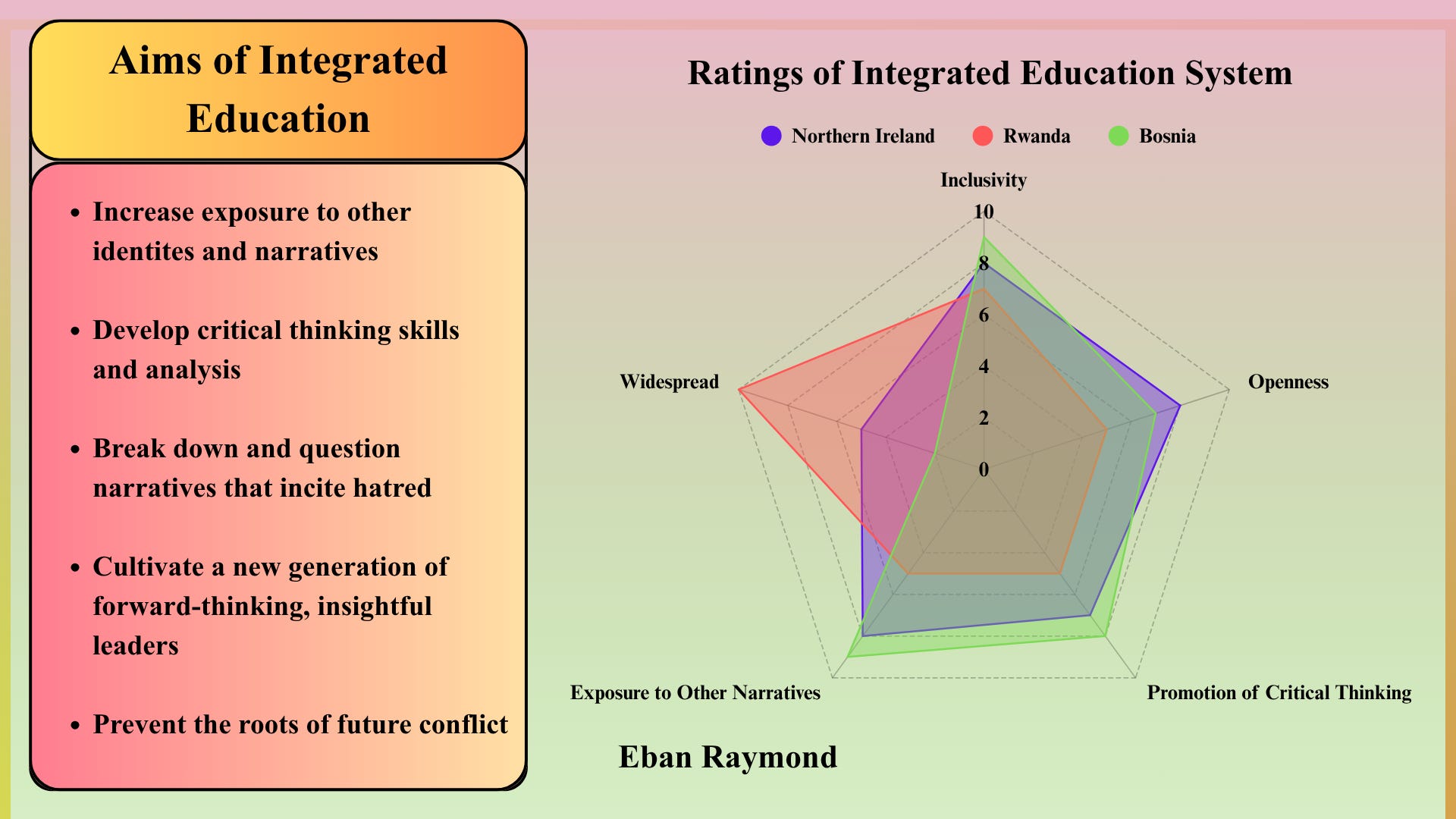
Conflicting narratives and identities have always been at the forefront of conflict, continuing cycles of hatred and entrenching the idea that one group of people is somehow bound to eternal enmity with another. This was apparent in several conflicts in the 1990s, from the Troubles in Northern Ireland to the Bosnian War and Rwanda; all of which possessed a strong ethno-sectarian dimension. Yet, as the ashes faded in the aftermath, the question of recovery inevitably went beyond simply reconstructing people’s lived environments. Homes can be rebuilt, but post-conflict societies soon find that revitalising community and individual relations involves a long, complicated process.
Simply ending strife does not eliminate the views and identities of different communities. Each may hold a differing perception of history that influences how they relate their experiences to society. Reconciling these views and bringing about mutual acceptance and understanding, is vital. It is necessary not only forging an equitable, durable peace but ridding the very roots that originally incited the conflict. To that end, integrated education has shown potential where it has been implemented. Designed to foster an environment of mutual respect and open-mindedness through an inclusive, well-thought curriculum, integrated education allows children to meet several human needs and truly move beyond the past. However, it remains a disproportionately underused tool in post-conflict settings even today. Practically, it can be difficult to implement, requiring a large infusion of money and specialist knowledge. This is most apparent in three well-studied post-conflict zones: Bosnia, Northern Ireland and Rwanda. Each has each pursued different, sometimes limited, approaches to integrated education, to secure the shared future that their citizens deserve.
Northern Ireland: Looking Beyond the Surface
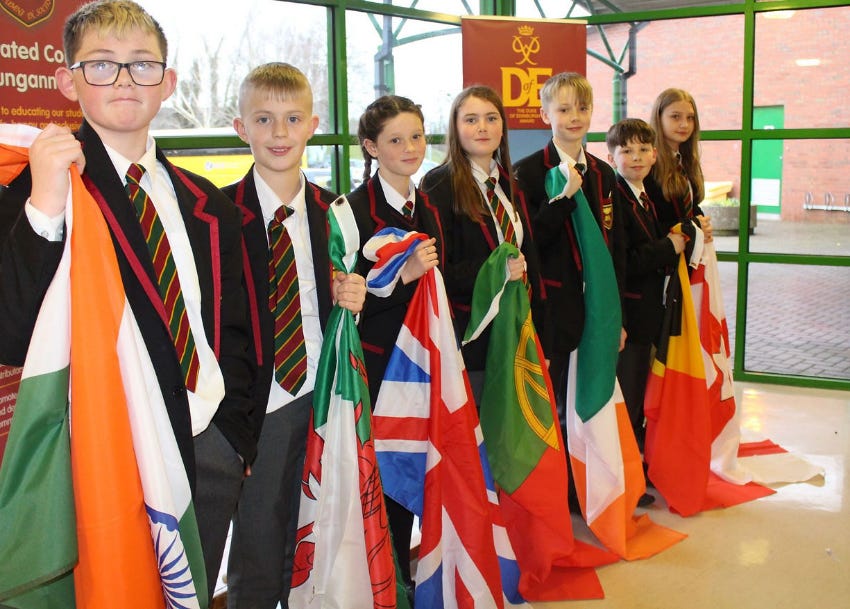
CC: Pupils at a Northern Irish integrated school demonstrate their various nationalities, 2022, Integrated College Dungannon.
At its core, integrated education allows children to meet the fundamental human need of understanding both themselves and others. Mutual acknowledgement and acceptance of different traditions and views is one intended outcome of this unique system. Northern Ireland, which has had a long history of segregated education between Catholics and Protestants before and during the Troubles, began to pursue integrated education by transforming sectarian schools into mixed ones after the Good Friday Agreement in 1998.
Most students in integrated schools reported feeling at ease with discussing the aspects that formed their identities, whether religion or ethnicity. Through shared activities such as sports, the invisible, superficial fault lines that had once separated individuals were broken down. Misconceptions were addressed, critical discourse between students over differing views took place and a climate of co-operation and understanding was cultivated. As one student remarked, ‘I just identify with whoever talks to me.’ Despite this, the limited scale of implementation has meant that the benefits of integrated education remain restricted to a minority of Northern Irish schools.
Fifty such institutions have reportedly considered an integrated system but are a small proportion of the thousand schools present. The transition to integrated education is not a simple, linear process. It requires financial capital, thorough and systematic re-training of teaching staff and an overhaul of local curricula. As such, implementation on a national scale remains a difficult endeavour. Regardless, the net positives of integrated education in Northern Ireland are abundant, especially in the sphere of encouraging a culture of open-minded critical debate.
Rwanda: Schooling From Above
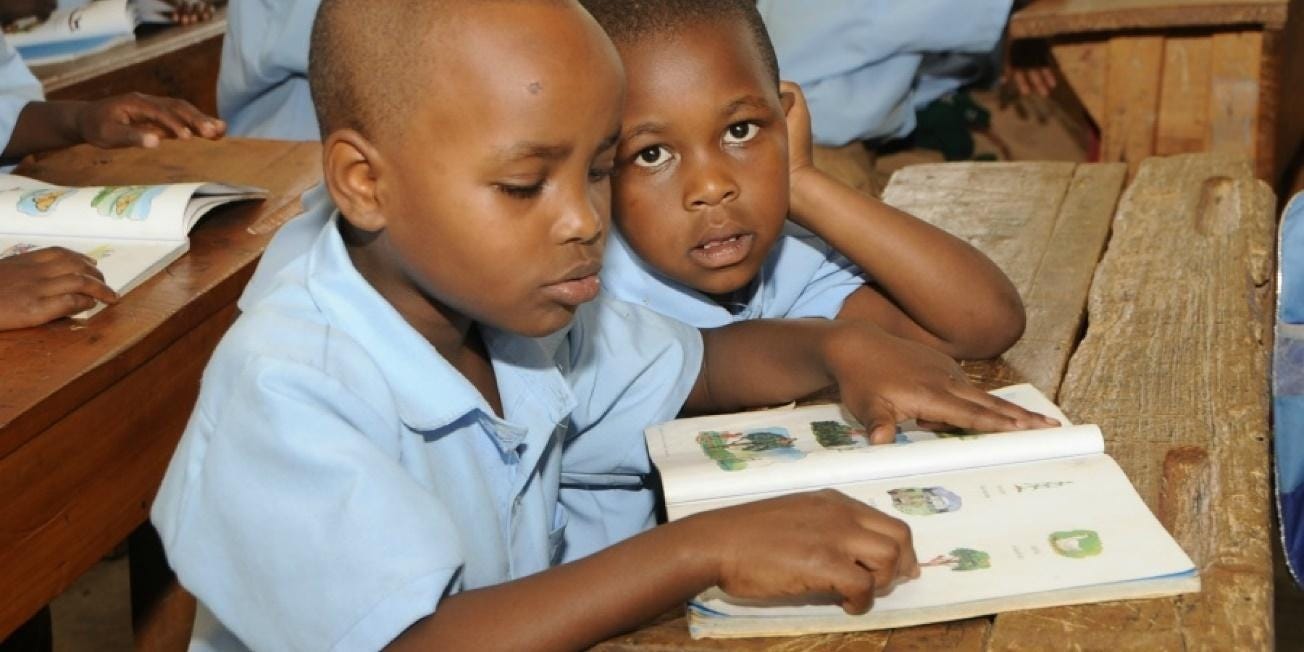
CC: Rwandan children consult a textbook, 2025, Global Partnership Education.
In the case of Rwanda, which suffered from a brutal genocide during a civil war from 1990-94, integrated education has been pursued as part of a state-mandated ‘Unity and Reconciliation’ programme. Where it differs from the integrated system in Northern Ireland is that it is a state-driven initiative. Emphasis is placed on a top-down narrative of Rwanda’s national history. By 2006, simple labels like ‘Hutu’ or ‘Tutsi’ that had once marked enormous rifts had been transcended. Instead, a shared Rwandan identity was cultivated, but, crucially, at the expense of being able to openly discuss different views of history. The Rwandan government defended this approach, framing any scrutiny of history as a potential hindrance to reconciliation efforts, a possible way of dredging up old wounds. This has discouraged students and teachers alike from engaging in history as a subjective discipline in favour of following a rigid, more authoritarian system of education that serves the state’s interests.
By 2020, this system was still in place with two challenges. Firstly, the inability of students to develop skills in critical thinking leaves them vulnerable to the inception of ethno-centric narratives that reinforce divides. Almost 10% of Rwandans believe that the family was the main source of old hatreds still disseminated amongst the younger generations. Second, a singular, brittle state narrative can be easily hijacked by a potential group seeking to reincite ethnic hatred. Students are therefore deprived of a key human need – that of participation. How can young people truly develop intellectual independence without the opportunity to be exposed to and critique different viewpoints? As Rwanda has demonstrated, integrated education features several different components that contribute to its efficacy.
Bosnia: The Key To Reconciliation?
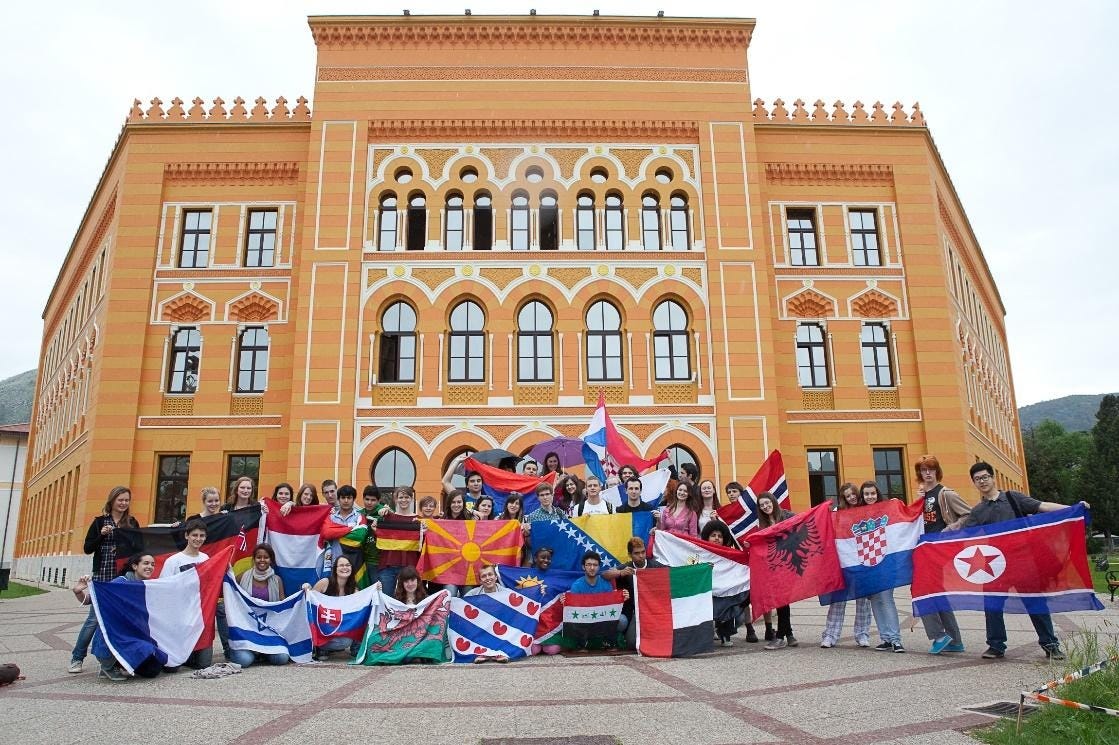
CC: UWC students demonstrate their nationalities with flags, 11th October 2024, UWC.
Integrated education can nurture a culture of understanding and identity that goes beyond those defined by simple hereditary cultural or religious characteristics. Above all, it can help to produce individuals capable of strengthening and enriching their nation’s democracy and society. Unlike Northern Ireland or Rwanda, Bosnia lacks a mainstream form of integration within their education system. The Dayton Agreement in the aftermath of the Bosnian War created convoluted administrative divisions across the country. These were formed along semi-ethnic lines that has resulted in a highly decentralised education system. Segregated education is the order of the day, except for UWC, the only integrated institution in the whole country.
Where integrated education has been prioritised for younger students in Rwanda and Northern Ireland, UWC comprises students aged 17-19, meaning its student body has experienced their formative years in segregated education. Students are expected to bring their engagement beyond the classroom through to community service such as helping at refugee camps. The physical contact with often homogeneous and insular communities can serve to break down psychological barriers that are invisible and far more pervasive than often thought. For example, Bosnian Muslims who had grown up with one dominant narrative met with Croats who followed their own. This opportunity was created through something as simple as community projects. This challenges the conception of integrated education as a purely academic tool and broadens it into a multidimensional model of reconciliation. Furthermore, student exposure to integrated education will pay long-term dividends by producing skilled leaders that can play a tangible role in constructing a genuinely pluralistic society.
A Tool In The Workshop of Peace
In conclusion, educated integration aims to facilitate reconciliation, not just through the mutual acceptance of the diversity of opinions, views and identities, but through the creation of an organic culture of co-operation and critical thinking. In the case studies that we have looked at, it has been a relatively local undertaking. Yet there has been a consistent demonstration of its effectiveness in contesting ethno-centric narratives that had once been the norm. The approach to the past is not one that buries it but rather examines it from varying perspectives to uncover the conditions that allowed conflicts to happen at all. The difficulty remains in making integrated education feasible on a community, and indeed, national scale.
As evident in the three countries, it is both fiscally costly and requires individuals willing to break ranks with their community’s conceptions of history and society. Neither is integrated education a panacea or a one-size-fits-all solution. Each post-conflict society is highly contextual, with sociocultural and geographical characteristics that must be taken into consideration. Instead, integrated education must be seen as part of a wider strategy to reconciliation; one that is slow and expensive but vital in ensuring an enduring, diverse peace. Through it, individuals are empowered to remember the past, manage the present, and prepare for the future.
Bibliography
Hodgkin, Marian, “Reconciliation in Rwanda: Education, History and the State” Journal of International Affairs 60, no. 1 (2006): 199-210. https://www.jstor.org/stable/24358020
Abbott, Lesley and Samuel McGuinness, “Northern Ireland pupils transcend cultural difference through transformed integrated schools: we don’t think about religion when we’re passing the ball, we just do it” International Journal of Inclusive Education 28, no. 28 (2024), 2072-2087. https://doi.org/10.1080/13603116.2022.2052194
Statista, “Number of schools in Northern Ireland from 2015/16 to 2025/25, by type.” Accessed 1 November, 2025, https://www.statista.com/statistics/385474/schools-in-northern-ireland/
National Unity and Reconciliation Commission. Rwanda Reconciliation Barometer 2020. 2020. https://www.rwandainthenetherlands.gov.rw/fileadmin/user_upload/Netherlands_user_upload/Documents/Updates/RWANDA_RECONCILIATION_BAROMETER_2020__N.pdf
Osler, Audrey and Irma Pandur, “The right to intercultural education: students’ perspectives on schooling and opportunities for reconciliation through multicultural engagement in Bosnia and Herzegovina” Intercultural Education 30, no. 6 (2019): 658-679. https://doi.org/10.1080/14675986.2019.1626576
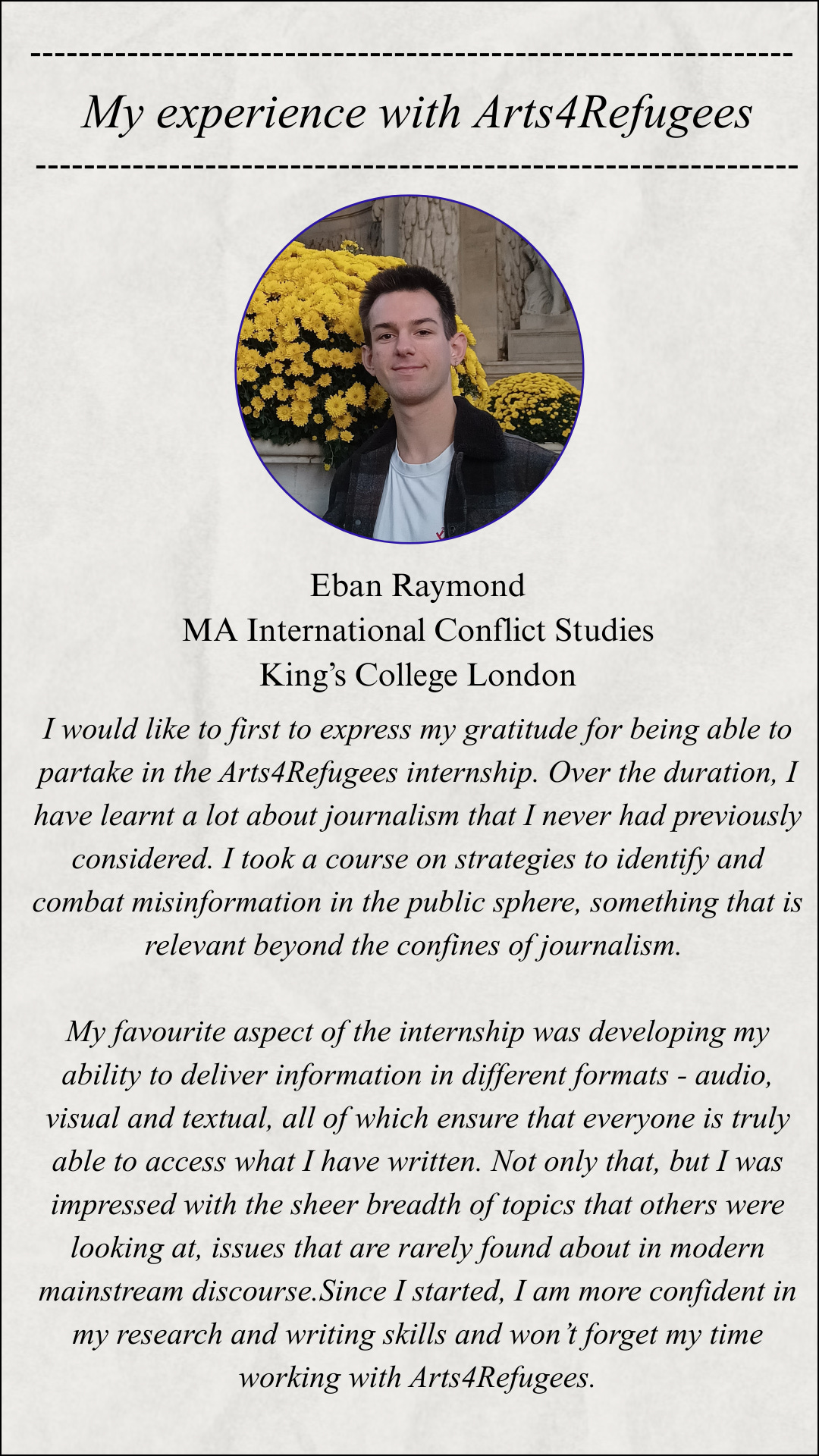
In this episode Eban discusses the complexity of using integrated education to reconcile community differences in post conflict communities. He is a Citizen journalist with us on a placement organised with Department of War Studies, KCL. This article was edited using Lex.page.
Thank you for reading an A4R 🎨 Post. Don’t forget to visit our gift shop here. Every purchase scales our impact and pays our bills.


